A clothing design may begin as a sketch, reference image, or digital drawing. But a factory cannot manufacture a garment from a picture alone.
Before fabric can be cut, the design needs to be translated into a set of precise pattern pieces.
This process is known as garment pattern making.
For businesses ordering custom clothing, understanding pattern development is useful because many fit and construction problems begin before the first piece of fabric reaches the sewing machine.
What Is a Garment Pattern?
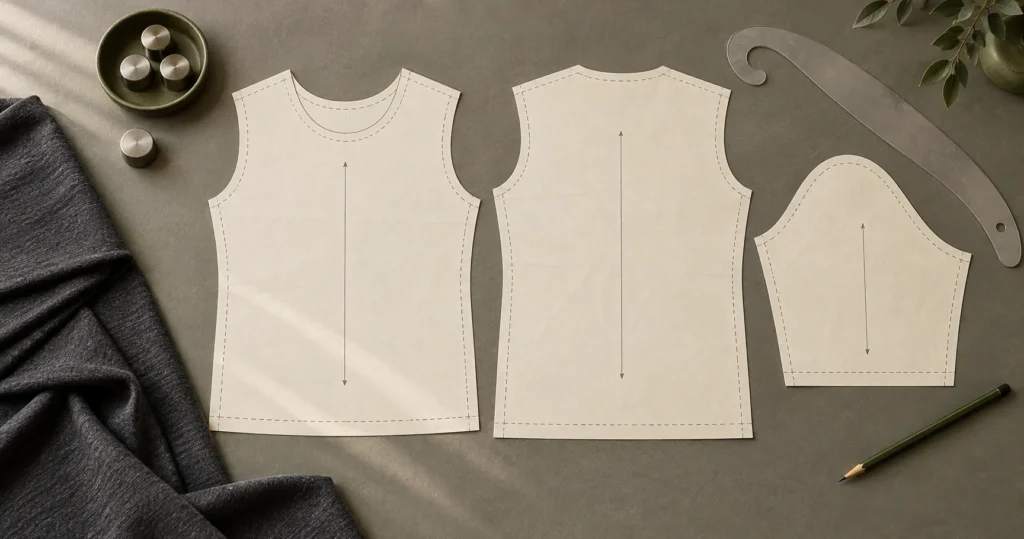
A garment pattern is essentially a template used to create the individual fabric components of a garment.
For example, a basic T-shirt may require separate pattern pieces for:
- front body
- back body
- sleeves
- collar
- cuffs or other finishing components
The pattern determines the shape and relationship of these pieces.
According to a recent apparel manufacturing guide from Jiashun Clothing, production patterns can include information such as seam allowances, cutting directions, matching marks, and identifiers in addition to the basic shape of each component.
This information allows the garment to be reproduced consistently.
Why a Drawing Is Not Enough
A design image usually shows the appearance of the garment.
A pattern must describe its three-dimensional construction.
For example, two shirts can have exactly the same chest measurement but feel completely different because of differences in:
- shoulder angle
- armhole shape
- sleeve position
- front-to-back balance
- neckline construction
- body length
- garment ease
This explains why simply providing measurements does not always guarantee a good fit.
Pattern development translates those measurements into an actual garment shape.
From First Pattern to Sample
A typical development sequence can look like:
Design concept → Initial pattern → Cutting → Sample sewing → Fit evaluation → Pattern revision → Second sample → Production pattern
The first sample is therefore not necessarily the final product.
It is an important stage for identifying problems before bulk manufacturing.
What Happens During a Fit Review?
A sample may be evaluated on a model or mannequin.
The development team can check:
- shoulder position
- chest width
- sleeve length
- sleeve angle
- neckline
- garment length
- overall balance
- ease of movement
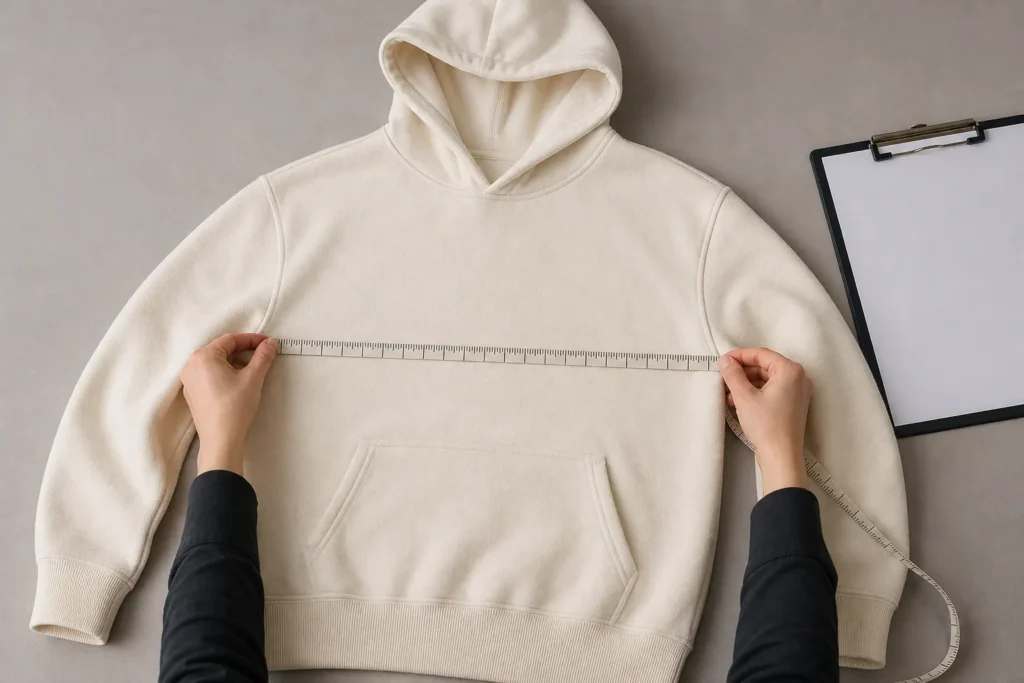
Some issues may not be obvious when looking at a flat measurement chart.
For example, a shirt can technically meet its chest-width specification but still pull around the armhole when the wearer raises their arms.
That is a pattern problem rather than simply a measurement problem.
Seam Allowances Matter
Patterns also need to account for seam allowances.
The amount of material added around an edge can affect:
- finished garment measurements
- seam strength
- sewing efficiency
- construction method
If seam allowances are inconsistent, the finished garment may not match the intended dimensions.
This is particularly important when several panels need to connect precisely.
Pattern Grading
Once the base size has been approved, the pattern may need to be graded into multiple sizes.
For example:
XS → S → M → L → XL → XXL
Grading is not simply adding the same amount to every measurement.
Different parts of the garment need to change according to the intended size relationship.
This is particularly important for garments with more complicated shapes or fitted silhouettes.
Why Custom Apparel Buyers Should Review Samples
A production sample gives the buyer an opportunity to evaluate the actual garment before large-scale production.
Instead of checking only:
“Does the design look right?”
buyers should also consider:
- Does the garment sit correctly?
- Are the shoulders positioned correctly?
- Is the sleeve comfortable?
- Does the neckline maintain its intended shape?
- Is there enough movement?
- Does the garment match the approved proportions?
These observations can then be converted into specific pattern revisions.
Pattern Making for Team Apparel
Team clothing can create additional development requirements because the same design may need to work across many body sizes.
A team jersey, hoodie, jacket, or training top may also need to accommodate:
- player names
- numbers
- sponsor graphics
- different logo locations
- different size ranges
The pattern needs to leave sufficient usable space for these elements without interfering with seams or garment construction.
Our Approach to Custom Clothing Development
For custom apparel projects, pattern development can be treated as an important bridge between design and production.
Our team can work from the customer’s design references and approved specifications to develop the garment structure before bulk manufacturing begins.
The objective is to ensure that the final garment reflects not only the appearance of the original design but also its intended proportions and construction.
Questions Buyers Should Ask
Before approving a custom clothing sample, buyers can ask:
- Has the production pattern been finalized?
- How many sample revisions are included?
- Has the sample been tested on the intended size range?
- How are seam allowances defined?
- How will the pattern be graded?
- Will the approved pattern be used for future repeat orders?
- How are pattern changes documented?
Final Thoughts
Pattern making is one of the hidden stages between a clothing idea and a finished garment.
A strong pattern provides the structural foundation for cutting, sewing, fitting, and eventually mass production.
For custom apparel buyers, spending time reviewing the pattern and sample before bulk production can help prevent much more expensive corrections later.