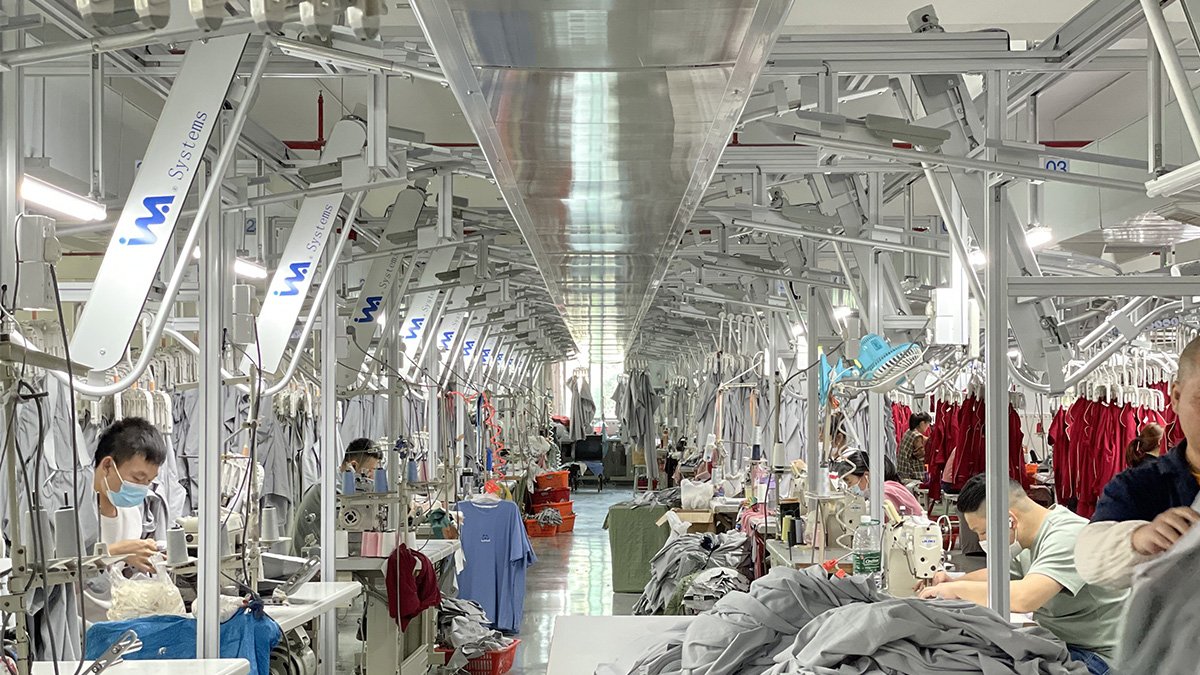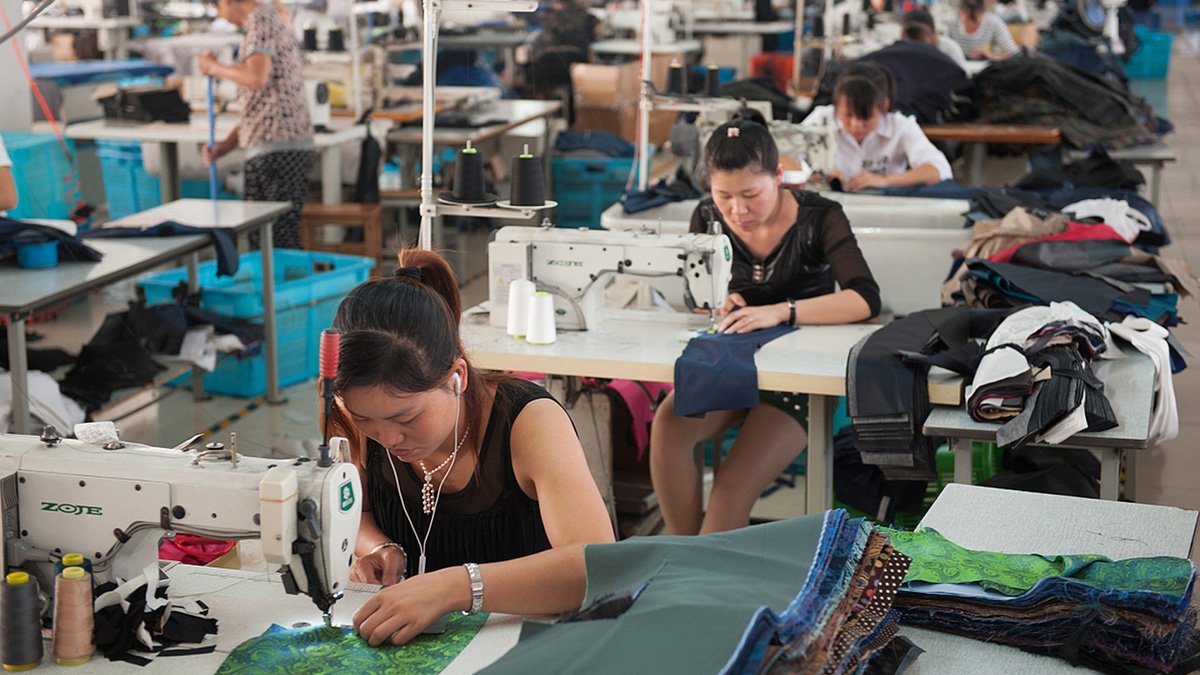
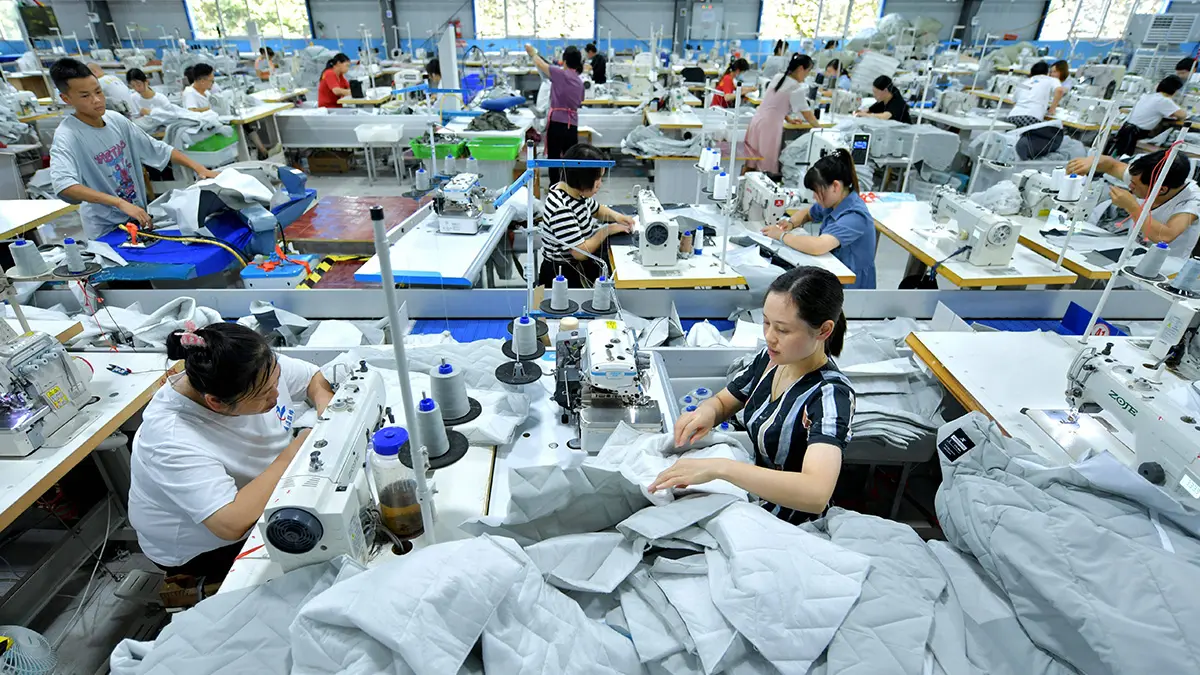
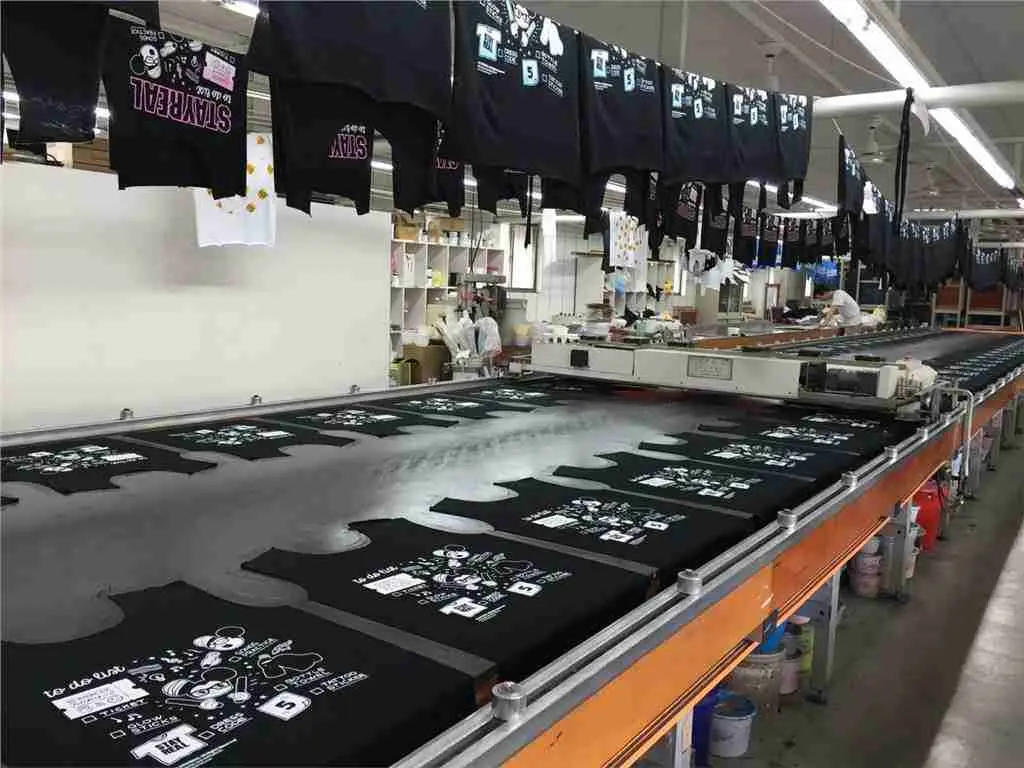
For decades, apparel manufacturing has relied heavily on skilled human labor.
Cutting, sewing, finishing, inspection, and packing all involve materials that are flexible, deformable, and difficult for machines to handle.
In 2026, however, automation is becoming an increasingly important part of the industry’s technology roadmap.
The change is not necessarily about replacing the entire factory with robots. Instead, manufacturers are increasingly combining automation, AI, digital systems, and human expertise.
Why Apparel Is Difficult to Automate
Automating metal or plastic components is relatively straightforward because rigid materials are predictable.
Fabric is different.
It can:
- stretch
- fold
- wrinkle
- deform
- slip
- change shape
- behave differently depending on its construction
This makes automated fabric handling and sewing particularly challenging.
A September 2026 report based on a Gherzi Germany study for VDMA noted that cutting, inspection, and parts of finishing are already well suited to automation, while sewing and joining remain more difficult because flexible materials are challenging to control.
AI-Assisted Fabric Handling
One important development is the use of computer vision and AI to identify fabric pieces and determine how machines should handle them.
At Texprocess 2026, CITEVE demonstrated a robotic T-shirt production cell combining AI-based gripping with automated sewing.
According to Textile World, the system uses computer vision to identify fabric pieces and calculate suitable grasp points based on characteristics such as shape, size, and material.
This addresses one of the fundamental problems in textile automation:
How can a robot reliably pick up and manipulate soft fabric?
Automated Sewing
Sewing itself is also beginning to receive more automation attention.
Rather than attempting to automate every garment immediately, technology developers are focusing on specific products and standardized production cells.
The CITEVE project reported pilot cycle times of just under 35 seconds per T-shirt in its testing environment, although this is a development-stage system and should not be interpreted as a universal production benchmark for apparel factories.
This distinction is important for buyers.
Technology demonstrations do not necessarily mean that every garment can already be produced fully automatically.
AI and Robotics Are Moving Beyond Experiments
Another 2026 development comes from CreateMe.
In June 2026, Textile World reported that CreateMe, Avalo, and Laguna Fabrics launched a project connecting climate-smart cotton, textile production, and robotic garment assembly into an AI-assisted manufacturing ecosystem.
In September, Textile World reported that CreateMe was moving toward broader commercialization of its automated apparel manufacturing platform.
These developments illustrate a broader industry direction: automation is increasingly being treated as part of an integrated production system rather than a single machine.
3D Textile Manufacturing
Another approach is to change the manufacturing process itself.
Instead of making large pieces of fabric and subsequently cutting and sewing them into garments, companies such as unspun are developing 3D weaving technologies intended to create shaped garment components directly from yarn.
Textile World reported in 2026 that unspun was working toward automated U.S. apparel manufacturing hubs using AI-enabled 3D weaving.
This is different from simply installing a faster sewing machine.
It attempts to reduce the number of downstream manufacturing steps.
What Does This Mean for Custom Apparel Buyers?
For customers purchasing custom clothing today, automation does not mean that every order will suddenly become fully automated.
The more immediate impact is likely to appear in specific production areas.
Potential areas include:
- automated cutting
- fabric inspection
- digital production tracking
- robotic material handling
- automated sewing for standardized products
- automated packaging
- AI-assisted quality inspection
- digital production planning
The VDMA-related 2026 report emphasizes that future competitiveness is increasingly about how these systems work together rather than the performance of one individual machine.
Human Expertise Still Matters
Automation does not eliminate the importance of experienced production teams.
Custom apparel often involves:
- unusual designs
- multiple fabrics
- different sizes
- complex customization
- embroidery
- printing
- special trims
- customer-specific packaging
These requirements can make fully automated production difficult.
For this reason, a practical factory model may combine automated equipment with skilled workers who handle development, machine setup, quality decisions, troubleshooting, and specialized operations.
What Should Buyers Ask Manufacturers?
When evaluating a modern apparel manufacturer, buyers can ask:
- Which production stages are automated?
- Is fabric inspection digital or manual?
- How is production data tracked?
- How are quality problems identified?
- Which processes are automated and which remain manual?
- Can automation support customized products?
- How does the factory maintain consistency between production batches?
These questions are often more useful than simply asking whether a factory is a “smart factory.”
Our Perspective on Manufacturing Technology
For custom apparel production, technology should ultimately serve practical objectives:
- consistent quality
- efficient production
- better traceability
- reduced production errors
- reliable delivery
- flexible customization
Automation is one tool for achieving these goals.
The most useful technology is not necessarily the most futuristic machine. It is the technology that can be integrated effectively into the actual production process.
Final Thoughts
The apparel industry is entering a period in which AI, robotics, digital systems, and advanced textile technologies are becoming increasingly connected.
However, the transition will not happen overnight.
For custom clothing buyers, the important question is not simply “Does this factory use robots?”
A better question is:
“How does the factory use technology to improve the consistency, efficiency, and traceability of my specific order?”
That is likely to be the more practical measure of manufacturing technology in the years ahead.