Introduction
When fabric is cut into garment panels, not every part of the fabric becomes part of the finished garment.
Small pieces, narrow strips, defective sections, and other production remnants can remain after cutting.
For an apparel factory, these materials are not simply an environmental issue.
They can also represent:
- Material loss
- Sorting work
- Storage requirements
- Recovery opportunities
- Disposal costs
Recent research has highlighted pre-consumer textile waste from garment manufacturing as an important area for improved sorting and recovery.
1. Where Fabric Waste Comes From
Pre-consumer textile waste can come from several stages.
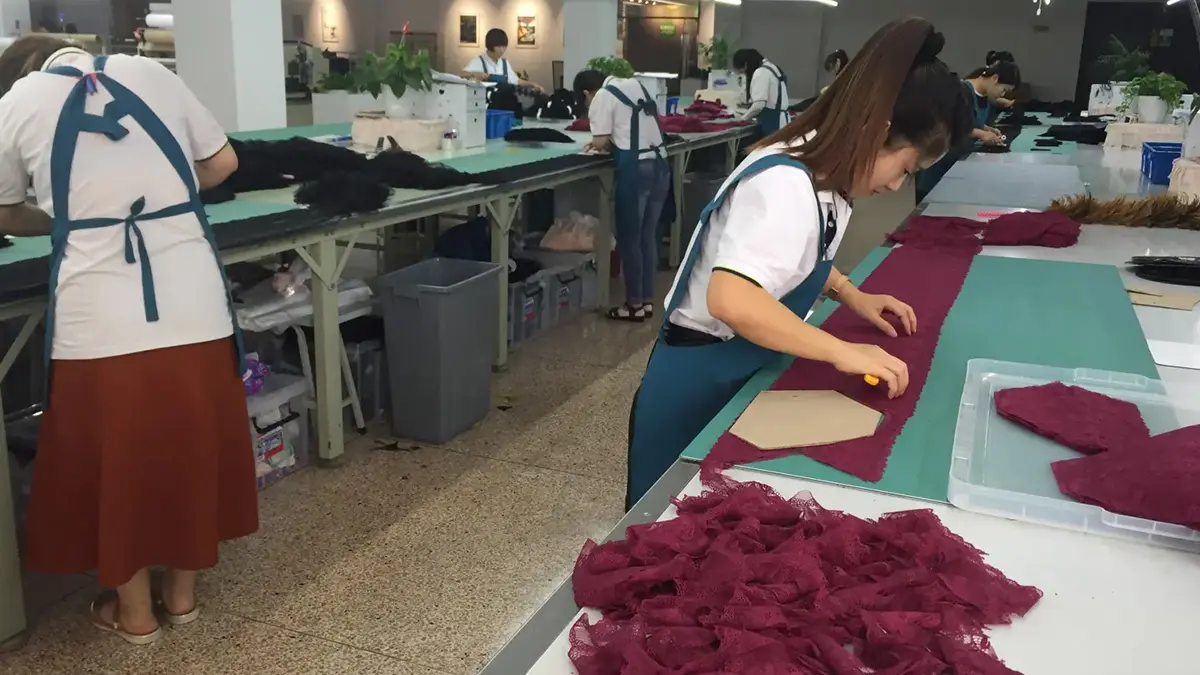
During cutting, examples include:
- Fabric offcuts
- Narrow strips
- Small unusable pieces
- Cutting remnants
- Defective material
Other production stages may also create textile waste.
The type of waste matters because different materials can have different recovery possibilities.
2. Not All Fabric Scraps Are the Same
A factory may handle several categories of scraps.
For example:
Large usable pieces
These may potentially be reused for smaller components or sample development.
Small clean scraps
These may be suitable for textile recycling depending on fiber composition.
Mixed-material scraps
These can be more difficult to process.
Contaminated or damaged materials
These may have fewer recovery options.
Therefore, sorting is an important first step.
3. Fiber Composition Matters
A cotton cutting scrap is not necessarily handled in exactly the same way as a polyester or blended-fabric scrap.
The recovery process can depend on:
- Fiber type
- Fabric construction
- Color
- Finishing
- Contamination
- Material blends
This is one reason accurate material information can be useful beyond the garment itself.
If waste is mixed together without identification, later sorting becomes more difficult.
4. Reuse Can Be Simpler Than Recycling
Not every scrap needs to be mechanically recycled.
If a piece is large enough, it may be reused directly.
Possible applications can include:
- Small product components
- Sample pieces
- Testing
- Internal prototypes
- Training
- Packaging-related applications
Direct reuse can avoid some processing steps.
However, whether reuse is practical depends heavily on the size, shape, color, material, and quantity of the remaining fabric.
5. Mechanical Recycling
Mechanical textile recycling generally involves processes that physically break down textile materials so they can be used again.
Depending on the material, recovered fibers may be used in:
- New yarns
- Nonwoven materials
- Insulation
- Filling materials
- Other textile applications
The resulting quality depends on the original fiber and the recycling process.
Mechanical recycling therefore does not necessarily mean:
Old scrap → identical new fabric
The recovered material may instead enter a different application.
6. Sorting Is a Major Challenge
One of the biggest practical issues is contamination and material mixing.
If scraps from different fibers are placed into the same container, it becomes harder to determine what the final material contains.
A 2025 open-access study on pre-consumer garment waste examined QR-code-supported sorting and reported improved sorting efficiency in the facilities studied. The research was conducted in specific Bangladeshi manufacturing settings, so its results should not be generalized to every factory.
The broader lesson is that accurate sorting and material identification are important parts of textile waste recovery.
7. What Buyers Can Ask Factories
If sustainability or waste management matters to a buyer, useful questions include:
- What happens to cutting scraps?
- Are scraps sorted by material?
- Are large pieces reused?
- Are textile scraps sent to recycling partners?
- Are different fibers separated?
- Is waste data recorded?
- Can the factory explain its waste-handling process?
The goal is not simply to ask:
“Do you recycle fabric?”
A better question is:
“What happens to different categories of production waste?”
8. Waste Reduction Starts Before Cutting
Waste management should not begin after fabric has already become scrap.
Production planning can influence how much material is left over.
Factors include:
- Garment pattern design
- Marker efficiency
- Fabric width
- Size distribution
- Pattern placement
- Order quantity
- Cutting strategy
This means waste reduction and waste recovery are related but different goals.
Waste reduction: avoid creating unnecessary waste.
Waste recovery: find a useful pathway for material that has already become waste.
Both can be considered in an apparel production program.
Our Approach to Custom Apparel
For custom apparel projects, our approach is to consider material efficiency as part of production planning.
Pattern layout, fabric utilization, cutting organization, and the handling of remaining materials can all affect overall material efficiency.
Where practical, usable remnants can be separated from smaller waste materials so that different categories are not unnecessarily mixed together.

Conclusion
Fabric scraps are an unavoidable part of many apparel manufacturing processes, but their final destination does not have to be the same in every case.
Depending on their size, material, condition, and composition, scraps may be reused, sorted for recycling, converted into other materials, or managed through other waste pathways.
For B2B buyers, the most useful approach is to look beyond general sustainability claims and ask for a clear explanation of how production waste is actually handled.
Good waste management begins with a simple principle:
Know what material you have before deciding what to do with it.