Topstitching is one of the most visible details in garment construction. It can define garment edges, emphasize design lines, secure folded fabric, and create a more structured appearance.
In custom apparel, inconsistent topstitching can make an otherwise well-made garment look unfinished. Suppliers should therefore consider stitch length, thread, spacing, and fabric characteristics during garment development.
1. Decide Whether Topstitching Is Functional or Decorative
Topstitching can serve different purposes.
Functional topstitching helps hold fabric layers in position, reinforce folded edges, or keep facings and other construction details flat. Decorative topstitching creates visible lines that contribute to the garment’s overall style.
Some garments use subtle, matching-color stitching, while workwear and denim may feature more prominent contrast stitching.
The purpose should be established before selecting thread and stitch settings. A decorative line may require a different visual treatment from stitching intended primarily to secure fabric.
2. Select an Appropriate Stitch Length
Stitch length influences both appearance and fabric behavior.
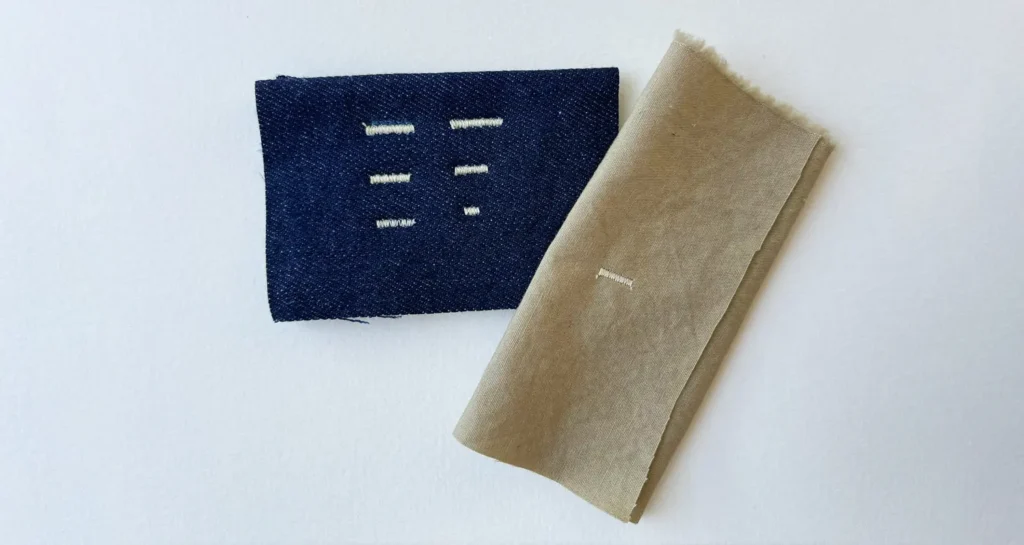
Short stitches can create a dense, refined line, but excessive needle penetration may weaken delicate materials or produce an unnecessarily stiff finish.
Longer stitches can create a more visible, relaxed appearance. However, stitches that are too long may look uneven or become less secure in areas that experience frequent movement.
The appropriate stitch length depends on fabric weight, thickness, garment style, and the intended appearance.
Suppliers should test stitching on the actual fabric rather than relying on a single setting for every material.
3. Control the Distance from the Garment Edge
Topstitching should maintain a consistent distance from the edge or seam line.
Uneven spacing is particularly noticeable around collars, pocket openings, cuffs, hems, and front openings.
For paired or symmetrical garment components, the stitching should also look balanced on both sides.
A suitable guide or presser-foot reference can help maintain consistent spacing during sewing. Curved sections may require additional attention because the fabric can shift more easily.
4. Choose Thread That Matches the Fabric
Thread selection affects the visual weight and performance of topstitching.
A thick decorative thread can create a strong visual line on denim or heavier workwear. On lightweight shirts or softer fabrics, the same thread may look excessive or create unwanted stiffness.
Consider the following factors:
- Thread thickness and strength
- Color contrast against the main fabric
- Compatibility with the fabric’s weight
- Resistance to washing and regular wear
- The intended visual character of the garment
For a clean appearance, thread tension should also be controlled so that the stitching does not create loops, puckering, or visible irregularities.
5. Consider Fabric Thickness at Intersections
Topstitching becomes more challenging where several fabric layers overlap.
Examples include pocket corners, waistband edges, folded hems, and seam intersections. These areas can create uneven stitching if the presser foot cannot feed the fabric smoothly.
Suppliers should examine whether the fabric layers need to be graded, pressed, or arranged differently before topstitching.
This helps prevent skipped stitches, uneven stitch length, and visible changes in stitching direction.
6. Inspect the Finished Stitching
A finished garment should be checked from both the outside and the inside.
Important inspection points include:
- Straight and consistent stitch lines
- Uniform distance from edges
- Appropriate stitch length
- No skipped stitches or loose loops
- No excessive puckering
- Consistent thread color and appearance
- Smooth transitions around corners and curves
On garments with decorative contrast stitching, even small inconsistencies can be highly visible.
Conclusion
Topstitching is both a construction technique and a design feature. By controlling stitch length, spacing, thread selection, and fabric handling, suppliers can create custom garments with cleaner lines and a more consistent professional appearance.