

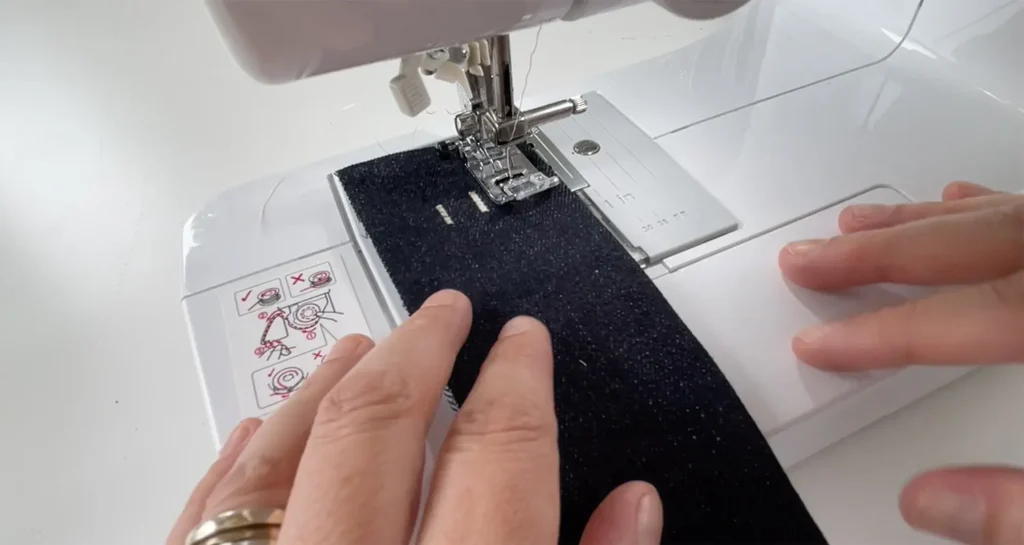
Custom clothing must do more than maintain an attractive appearance. Areas that experience repeated pulling, stretching, and movement need additional reinforcement to prevent premature damage. Bartack stitching is one practical construction technique used to strengthen these vulnerable points.
For workwear, uniforms, trousers, jackets, and other frequently worn garments, the placement and execution of bartacks can directly influence product durability.
1. Understand Where Bartack Reinforcement Is Needed
Bartacks are short, dense groups of stitches used to reinforce specific areas of a garment. They are particularly useful where fabric is exposed to repeated tension.
Common locations include:
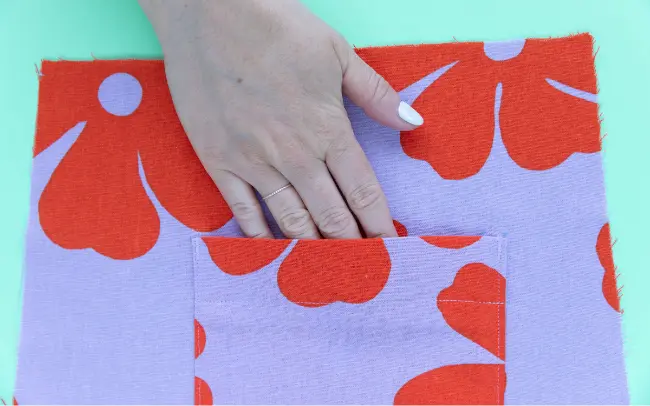
- The upper corners of patch pockets
- The ends of pocket openings
- Belt loop attachment points
- The ends of zipper openings
- The base of garment openings and slits
- Other areas where separate fabric components experience pulling forces
Not every seam requires a bartack. Applying reinforcement only where it serves a functional purpose helps maintain a clean appearance and avoids unnecessary stiffness.
2. Match Bartack Size to Fabric Weight
The dimensions of a bartack should be appropriate for the fabric and the amount of stress expected.
Lightweight fabrics generally require smaller, less visually prominent reinforcement. Heavy workwear fabrics may need wider or denser bartacks to distribute pulling forces across a larger area.
An oversized bartack can create an unnecessarily rigid section, while an undersized one may not provide sufficient reinforcement.
Suppliers should consider fabric thickness, construction, and garment function together rather than using one standard bartack size for every product.
3. Choose the Correct Stitch Density
Bartack quality depends on more than the number of stitches.
If the stitches are too dense for a delicate fabric, repeated needle penetration may weaken the material or create visible damage. If the stitch density is insufficient, the reinforced area may not withstand repeated stress.
The thread should also be compatible with the garment fabric. Thread thickness, strength, color, and surface appearance all affect the final result.
For garments with visible reinforcement, the bartack should look consistent and intentional rather than appearing as an irregular patch of stitching.
4. Pay Attention to Placement and Direction
Correct positioning is essential.
For example, pocket corners are commonly reinforced where the pocket opening meets the garment body. Belt loops need secure attachment at both ends because they experience pulling when a belt is worn.
The direction of reinforcement should follow the expected force whenever possible. A bartack placed too close to an edge may damage the fabric or fail to secure the intended area.
Suppliers should evaluate the complete construction around the reinforcement point, including seam allowances and nearby stitching.
5. Check Appearance and Fabric Damage
A strong bartack should not create unnecessary puckering, distortion, or thread loops.
During garment inspection, check:
- Whether the stitching is complete and consistent
- Whether the fabric has been damaged by repeated needle penetration
- Whether reinforcement positions are symmetrical where required
- Whether loose thread ends have been removed
- Whether the reinforced area remains flat enough for comfortable wear
For darker fabrics, thread contrast should also be considered. Reinforcement can be visible as a deliberate design detail or kept discreet through color matching.
6. Test Reinforced Areas Under Realistic Use
Visual inspection alone cannot confirm whether reinforcement is effective.
A garment should be evaluated through practical movements and use. Pocket corners can be checked for pulling, belt loops can be tested with a suitable belt, and openings can be examined after repeated movement.
The goal is to ensure that reinforcement supports the garment without creating uncomfortable stiffness or damaging the surrounding fabric.
Conclusion
Bartack reinforcement is a small construction detail with an important role in garment durability. By selecting appropriate locations, stitch dimensions, thread, and placement, suppliers can improve the performance of custom clothing while maintaining a neat and professional finish.

