
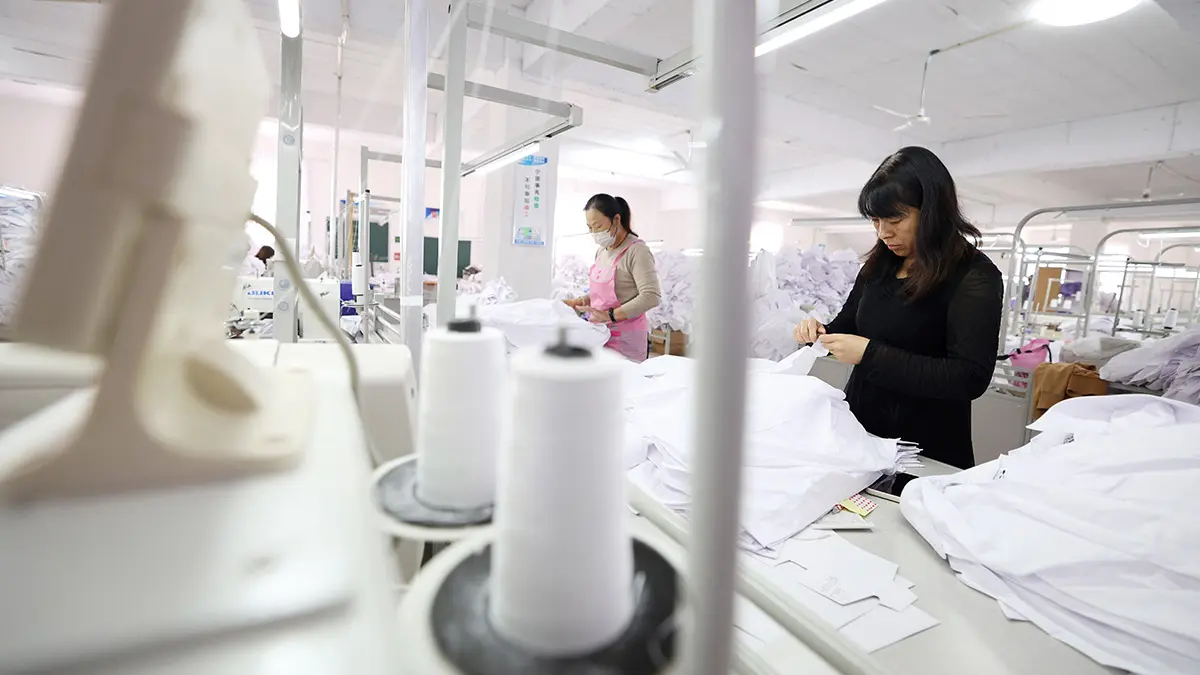
Some fabrics look beautiful but do not provide enough body or stability for a particular garment design. Lightweight cotton, silk, lace, and loosely woven materials may become transparent, lose their shape, or show construction details through the outer surface.
Underlining is a useful garment construction technique for addressing these issues. It adds a supporting fabric layer directly behind the main fabric, allowing both layers to be handled as one during construction.
For custom clothing suppliers, choosing the right underlining can improve appearance, stability, and wearing performance without changing the original design.
1. Understand the Purpose of Underlining
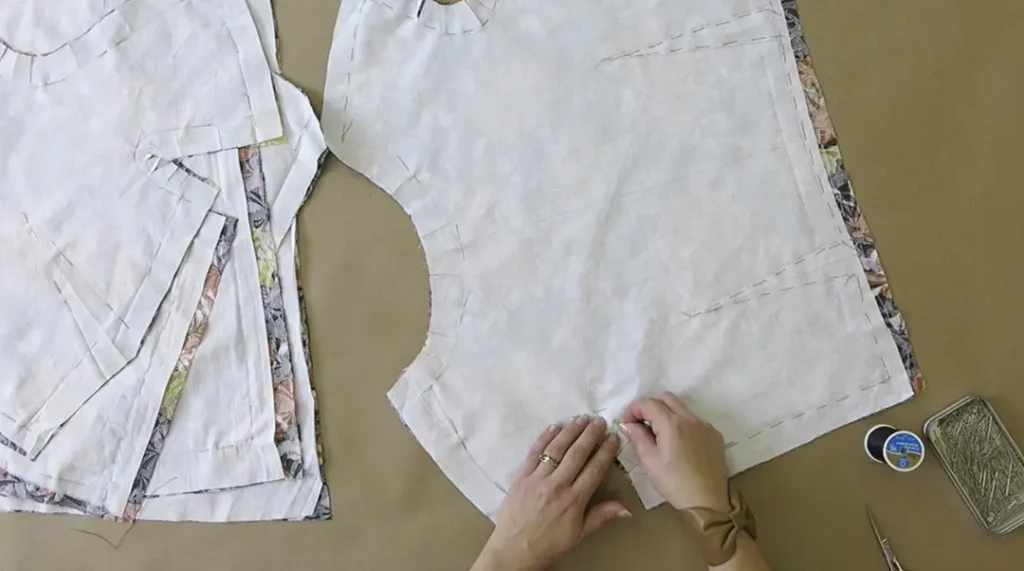
Underlining is different from a conventional lining. It is cut using the same pattern pieces as the main fabric and attached to the wrong side before the garment is assembled.
The two layers are then treated as one fabric during construction.
Underlining can serve several purposes:
- Improve the opacity of lightweight or sheer fabrics
- Provide additional body to soft materials
- Support seams and garment shaping
- Reduce distortion in loosely woven fabrics
- Help conceal internal construction details
- Provide a stable foundation for certain decorative elements
It is especially useful when the main fabric needs support but the garment design does not require a separate hanging lining.
2. Match the Underlining to the Main Fabric
The supporting layer should complement the main fabric rather than overpower it.
Important factors include weight, drape, flexibility, durability, and care requirements.
For example, lightweight cotton batiste may work well with delicate cotton or silk garments. Silk organza can provide support while retaining relatively low weight. A firmer cotton fabric may be more suitable when additional body is required.
The underlining should not make the finished garment unnecessarily heavy or stiff.
For stretch fabrics, the supporting layer should also have compatible stretch characteristics. Pairing a stretchy outer fabric with a rigid woven underlining can restrict movement and distort the garment.
3. Consider Transparency and Color
Underlining can improve the appearance of sheer or lightweight fabrics.
For pale fabrics, it may reduce unwanted transparency and help conceal seams, darts, and other internal construction details.
The color of the underlining also matters. A white support layer does not always produce the same visual result as a skin-tone or color-matched layer.
For sheer or translucent materials, suppliers should test the combination under different lighting conditions before finalizing the construction.
The goal is to achieve the intended appearance without changing the outer fabric’s original color or texture in an undesirable way.
4. Prepare Both Fabric Layers Before Construction
The main fabric and underlining should be prepared according to their care requirements.
If either material is likely to shrink, appropriate pre-treatment should be considered before cutting. Different shrinkage behavior between the two layers may cause puckering or distortion after washing.
Both layers should be cut accurately using corresponding pattern pieces.
During preparation, check that:
- The grain direction is appropriate for both fabrics.
- The pattern pieces align correctly.
- The supporting layer does not extend beyond unintended edges.
- Curved sections remain smooth.
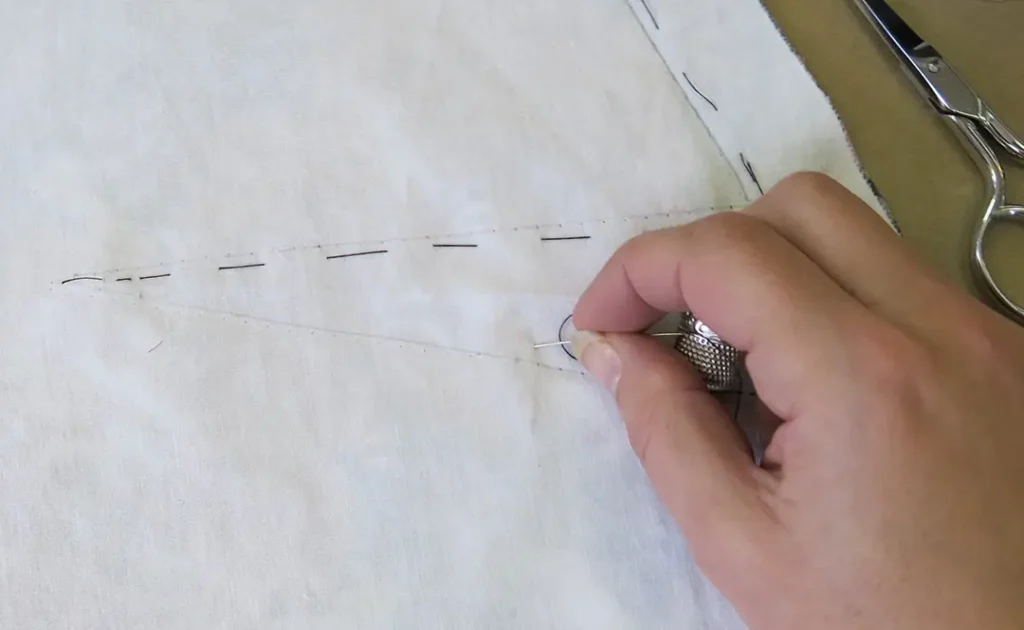
- The two fabrics do not shift during basting.
Careful preparation makes the combined fabric easier to handle during later construction.
5. Control Drape and Movement
Underlining changes how the main fabric behaves.
A very soft fabric may become more stable, while a naturally flowing material may lose some of its original movement if the supporting layer is too heavy.
This is particularly important for dresses, skirts, lightweight jackets, and garments with flowing silhouettes.
Suppliers should evaluate the finished fabric combination rather than judging the underlining material separately.
The supporting layer should improve the garment’s structure while preserving the intended silhouette.
6. Inspect the Finished Garment
After construction, the garment should be checked for uneven areas, puckering, stiffness, and differences in drape.
Pay particular attention to seams, darts, curved sections, and areas where the two layers meet other construction components.
The outer surface should remain smooth, while the supporting layer should perform its intended function without becoming visible.
The garment should also be evaluated after suitable care testing to confirm that the two materials remain compatible.
Conclusion
Underlining is a valuable technique for improving the performance of selected garment fabrics. By choosing compatible materials and controlling preparation, drape, and construction, suppliers can produce custom garments with better opacity, stability, and shape retention.

