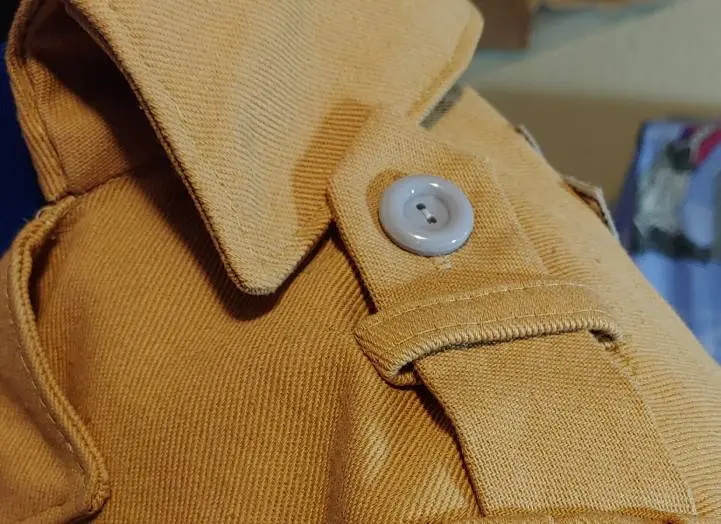
Epaulets are fabric details attached to the shoulder area of a garment. They are commonly used in uniforms, workwear, jackets, and certain outerwear styles.
Depending on the design, an epaulet may serve as a decorative feature, provide a place for insignia, or help create a more structured shoulder appearance.
For custom uniform suppliers, epaulet construction requires attention to shape, proportions, attachment, and compatibility with the garment’s overall design.
1. Choose an Appropriate Epaulet Shape
Epaulets can have different shapes depending on the intended uniform style.
Common designs include:
- Straight rectangular epaulets
- Tapered epaulets with narrower ends
- Rounded-end epaulets
- Pointed-end designs
- Wider shoulder tabs for decorative or identification purposes
The shape should complement the garment’s shoulder line rather than appear disconnected from the overall design.
For formal uniforms, simple and symmetrical shapes often create a cleaner appearance. For workwear, the design may prioritize practical attachment and durability.
2. Consider Shoulder Proportions
An epaulet should be proportionate to the garment.
If it is too wide, it may dominate the shoulder area. If it is too narrow, it may not provide enough visual space for its intended purpose.
Its length should also be considered in relation to the shoulder seam, neckline, and sleeve attachment.
For garments produced in multiple sizes, suppliers should check whether the epaulet maintains a balanced appearance across the size range.
A detail that looks appropriate on a medium-sized sample may appear oversized or undersized on other garment sizes.
3. Select Compatible Fabric and Interfacing
The material used for an epaulet should work with the main garment fabric.
Lightweight uniform fabrics may require a modest amount of interfacing to help the epaulet maintain its shape. Heavier fabrics may already provide sufficient structure.
The selected material should be evaluated for:
- Thickness and stiffness
- Color compatibility
- Shrinkage behavior
- Washing requirements
- Resistance to wrinkling
- Compatibility with the garment’s overall weight
Excessive stiffness can make the shoulder area uncomfortable, while insufficient support may cause the epaulet to wrinkle or lose its shape.
4. Plan the Attachment Method
Epaulets are usually attached around the shoulder seam or another suitable shoulder position.
The attachment method should provide a secure connection without creating excessive bulk.
Depending on the design, the epaulet may be permanently stitched to the garment or designed with a functional fastening detail.
For removable or adjustable designs, the fastening method should be evaluated for ease of use and durability.
The attachment should also be positioned so that it does not interfere with sleeve movement or create uncomfortable pressure when the wearer moves their arms.
5. Consider Buttons and Insignia Placement
Some epaulets include buttons, decorative fasteners, or identification insignia.
These details should be positioned consistently and should not interfere with the garment’s construction.
If a button is used, the surrounding fabric may need reinforcement to prevent pulling or distortion.
For uniforms with insignia, the available surface area should be sufficient for the intended design. The finished detail should remain visually balanced and should not overlap the shoulder seam or other garment features.
Suppliers should also consider whether the selected decoration method is compatible with the fabric and recommended care requirements.
6. Check Symmetry and Shoulder Comfort
Both epaulets should be positioned consistently.
During inspection, check:
- Matching length and width on both shoulders
- Consistent distance from the neckline
- Even alignment with the shoulder seams
- Smooth edges and corners
- Secure attachment stitching
- No unwanted fabric puckering
The wearer should also test normal arm movements to confirm that the epaulets do not restrict movement or create uncomfortable pressure.
7. Maintain Appearance After Washing
Epaulets can lose their shape if the outer fabric, interfacing, and fastening components respond differently to washing.
Before finalizing the construction, suppliers should consider how the complete shoulder detail will behave under the garment’s intended care conditions.
The finished garment should be checked for curling edges, loose stitching, fabric shrinkage, and changes in shape.
Conclusion
Epaulets can give custom uniforms a distinctive and structured appearance, but their quality depends on more than their visual design. Appropriate proportions, compatible materials, secure attachment, and careful inspection help ensure that shoulder details remain practical and consistent throughout garment use.