
Snap fasteners are used on jackets, uniforms, overshirts, workwear, and other custom garments that need a convenient opening and closing mechanism. Although they are small components, the wrong fastener can damage fabric, feel uncomfortable, or fail during repeated use.
Before bulk production, buyers should confirm not only how the snaps look but also how they interact with the garment’s fabric and construction.
1. Choose the Right Snap Type
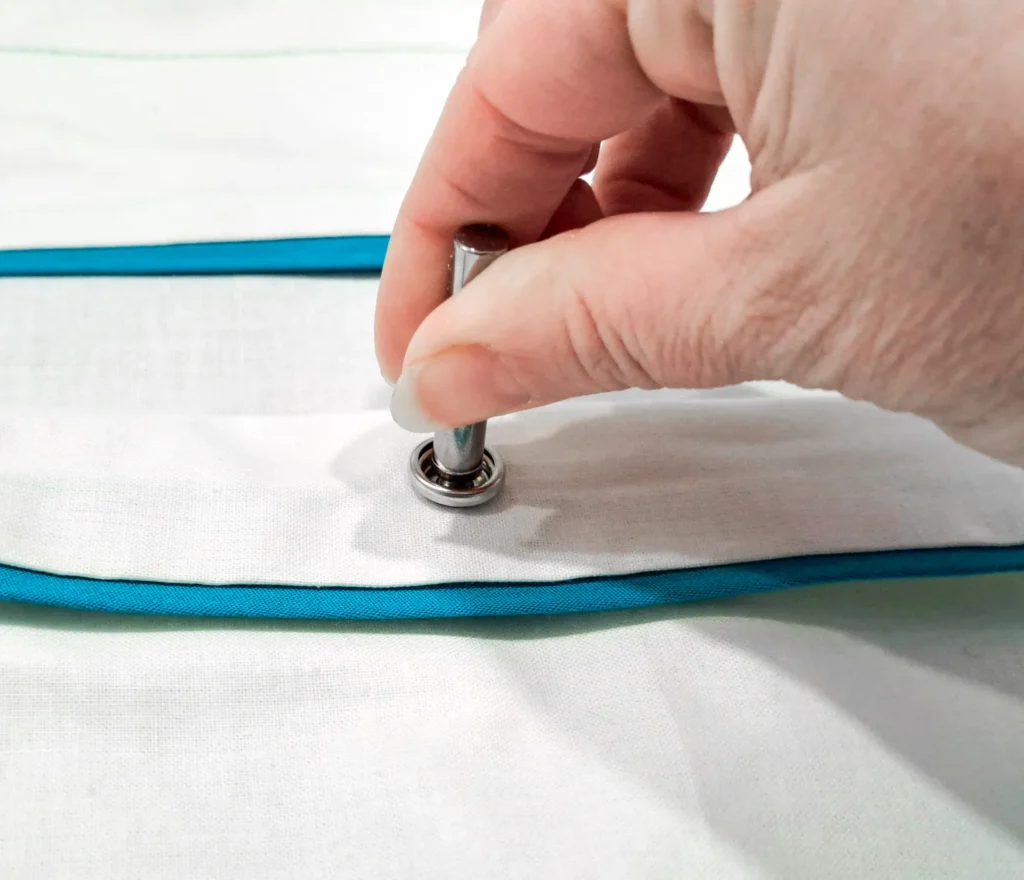
Snap fasteners are available in different materials, sizes, shapes, and finishes. Some are designed to be sewn on, while others are attached using a press or another setting method.
Buyers should specify the preferred type and provide a reference sample or clear technical description. For visible hardware, confirm the color and finish under realistic lighting rather than relying entirely on a screen image.
The chosen fastener should suit the garment’s intended function. A lightweight fashion garment and a frequently used work jacket may have different requirements for closure strength and handling.
2. Check Fastener Compatibility with the Fabric
The fabric layers around a snap must support the attachment without excessive distortion. Lightweight materials may wrinkle or tear, while thick multilayer constructions may require different hardware dimensions.
Ask the supplier to confirm whether reinforcement is needed and whether the selected snap is suitable for the complete fabric assembly. The post length and fastening structure must work with the actual material thickness.
Avoid approving hardware on the basis of appearance alone. A snap that looks correct on a loose component may not perform properly after it is installed in the garment.
3. Specify Placement and Alignment
For garments with multiple snaps, define their number, spacing, and location using a technical drawing or marked sample.
Check that the two sides of each snap align when the garment is closed. On a jacket or overshirt, misaligned fasteners can create uneven overlaps, puckering, or a crooked front opening.
The approved specification should identify the reference points used for measuring placement. If the design varies by garment size, explain whether the spacing remains fixed or changes according to the pattern.
4. Test Opening, Closing, and Fabric Condition
Before bulk production, inspect the sample for secure attachment, smooth operation, and comfortable handling. Open and close the fasteners repeatedly to check for loosening, deformation, or fabric damage.
The test plan should reflect the product’s intended use. For garments expected to be washed frequently or used in demanding environments, discuss appropriate wash and durability checks with the supplier.
Also inspect the reverse side of the fastener. Rough edges, exposed components, or poorly finished attachment points may affect comfort even when the outside looks acceptable.
5. Control Hardware Changes Before Production
Once the buyer approves the snap type, finish, size, and attachment method, these details should be included in the production specification.
If a component becomes unavailable, the supplier should request approval before making a substitution. A similar-looking replacement may differ in dimensions, attachment force, material, or surface finish.
During final inspection, check representative garments across different sizes and colors to verify that the snaps are consistent and securely attached.
Our Approach to Custom Apparel
A reliable snap-fastener specification covers the component, fabric compatibility, reinforcement, placement, and functional testing. Buyers should evaluate these details together instead of treating the snap as an isolated accessory.
A pre-production sample provides an opportunity to identify issues before the same construction is repeated across a large order.

Conclusion
Snap fasteners can make custom apparel easier to wear, but their performance depends on the relationship between hardware and garment construction. Confirming the specifications and testing the complete assembly before bulk production helps reduce avoidable quality problems.