
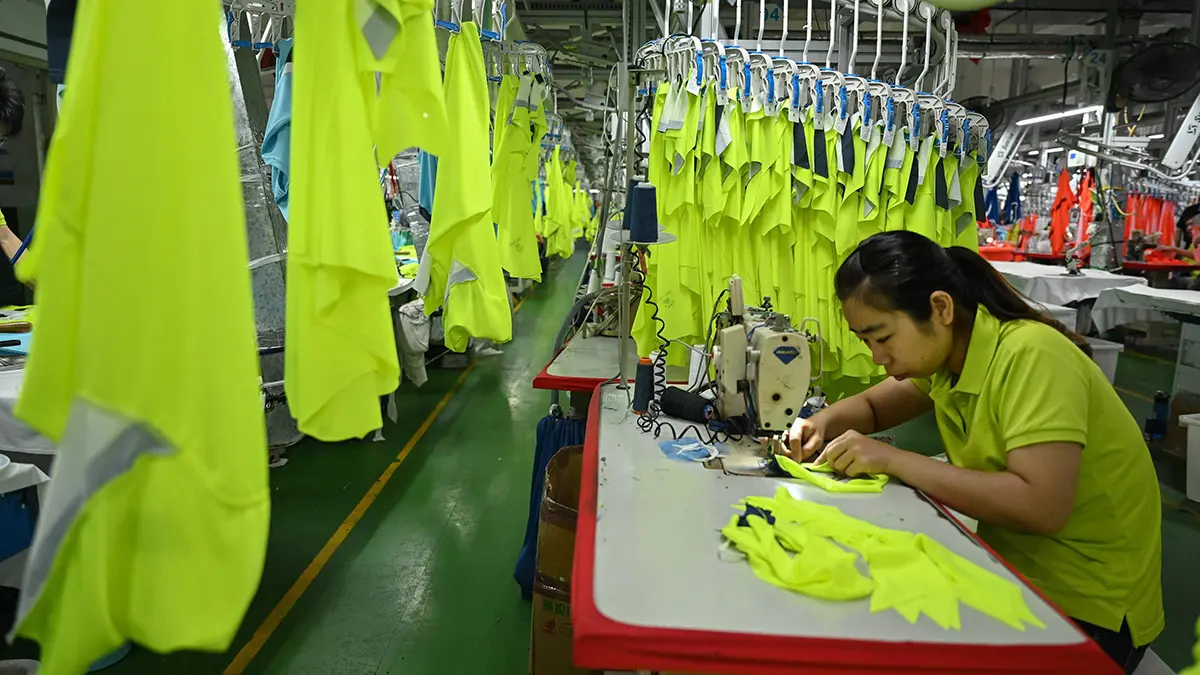

Reflective trim is often incorporated into custom workwear for people who operate in low-light environments or work near moving vehicles and equipment.
However, adding reflective strips to a garment is not simply a decorative decision. Their position, coverage, material compatibility, and relationship with the garment’s construction can influence visibility and wearing comfort.
For custom workwear suppliers, reflective details should be planned as part of the garment design from the beginning.
1. Understand the Difference Between Reflective and Fluorescent Materials
Reflective materials and fluorescent materials serve different purposes.
Fluorescent materials improve visibility under suitable daylight conditions. Retroreflective materials return light toward its source, helping the wearer become more visible when illuminated by headlights or other light sources.
Some high-visibility garments combine both material types.
The appropriate combination depends on the intended working environment and applicable safety requirements.
2. Plan Reflective Trim Placement
Reflective strips may be placed on the torso, shoulders, sleeves, and trouser legs.
Their layout should help make the wearer’s body position recognizable from different viewing directions.
For example, reflective details around the torso can improve visibility across the body, while sleeve and leg details may help indicate movement.
Placement should also consider areas that could be covered by pockets, equipment, backpacks, or other clothing.
3. Consider the Garment’s Shape and Movement
Reflective material should remain visible when the wearer moves naturally.
A strip placed too close to a fold or hidden beneath another garment section may become less effective.
Sleeves and trouser legs also change position during movement, so the reflective layout should be checked while the garment is being worn rather than only when it is laid flat.
4. Check Material Compatibility
Reflective materials may differ in flexibility, thickness, surface texture, and care requirements.
The selected material should be compatible with the main fabric and intended construction method.
For stretch garments, a rigid reflective strip may restrict movement or create tension. For lightweight garments, a heavy reflective component may affect the drape.
The attachment method should also be suitable for the fabric and expected laundering conditions.
5. Avoid Uncomfortable Construction Details
Reflective strips should not create rough edges, stiff areas, or uncomfortable seams.
Check the inside of the garment to make sure that stitching and attachment methods do not irritate the wearer.
Particular attention should be paid to areas that frequently contact the skin, such as the shoulders, waist, and inner sleeves.
6. Consider Relevant Safety Standards
When a garment is intended to meet a high-visibility safety standard, its design must follow the applicable requirements.
These may specify the type and amount of background material, the placement and width of reflective bands, and other performance criteria.
A visually attractive reflective design should not be assumed to comply with a safety standard. Compliance needs to be assessed against the relevant standard and appropriate testing or certification requirements.

Conclusion
Reflective trim is both a functional and visual feature of custom workwear. Careful placement, suitable materials, comfortable construction, and attention to applicable safety standards help create garments that are practical as well as visually consistent.