Introduction
Drawcords are common details in custom hoodies, jackets, joggers, shorts, and sportswear. They may appear simple, but their length, thickness, material, and attachment method can affect garment functionality, appearance, and safety.
For B2B buyers, the main challenge is not simply choosing a cord color. It is making sure the cord works with the garment design, remains secure during use, and meets the requirements of the intended market and wearer.
1. Specify the Cord Material and Thickness
Drawcords can be made from cotton, polyester, nylon, or other materials. Each option has different characteristics.
Cotton cords can provide a natural, casual appearance, while polyester and nylon options are often selected for their durability and availability in different finishes.
Before approving a material, buyers should confirm:
- Fiber composition
- Cord diameter and overall thickness
- Surface texture and flexibility
- Color and finish
- Stretch or deformation under tension
- Compatibility with the garment fabric
A thick cord may look suitable on a heavyweight hoodie but appear disproportionate on a lightweight training top. The cord should be evaluated as part of the complete garment.
2. Confirm Length and Adjustment Range
The required cord length depends on where it is used and how the garment is intended to fit.
A waistband drawcord may need enough length for adjustment, while a hem drawcord may require a different arrangement to control the garment’s silhouette.
Buyers should specify the cord’s finished length, how much should extend beyond the channel, and whether both ends should be visible.
The measurement method should also be clear. For example, the specification should distinguish the total cord length from the visible length outside the garment.
3. Choose the Right Cord End Finish
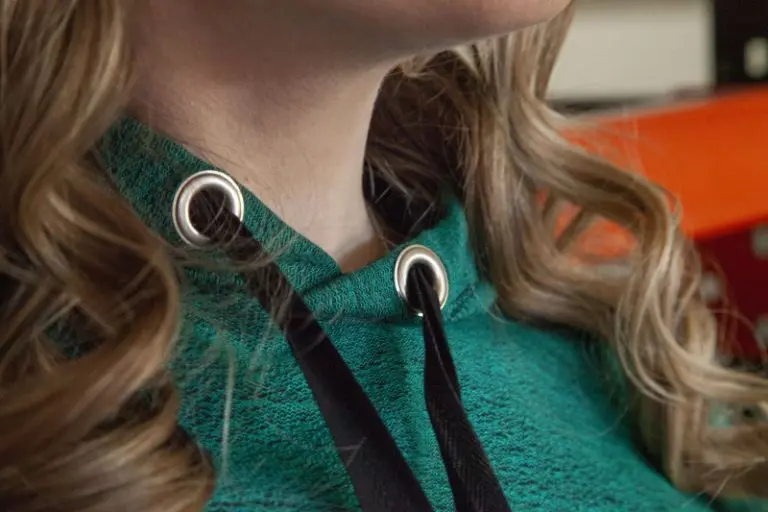
Cord ends can be finished with knots, folded stitching, molded tips, metal aglets, or other components.
Each option changes the appearance and may affect durability, cost, and wearer comfort.
Before bulk production, check whether:
- The finish matches the intended design
- Cord ends are secure
- Metal or plastic components have suitable edges
- The finish remains attached after repeated pulling
- The components are compatible with the garment’s care instructions
For a premium-looking garment, a poorly finished cord end can make an otherwise well-made product look inexpensive.
4. Check the Drawcord Channel
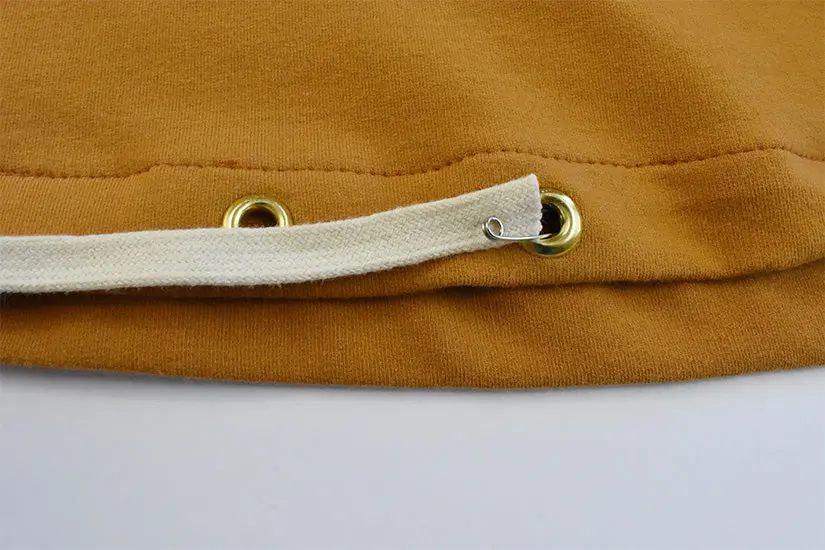
The channel must accommodate the cord without making adjustment difficult.
If the channel is too narrow, the cord may catch or become difficult to pull. If it is too wide, the garment may gather unevenly or the cord may move excessively.
Buyers should confirm the channel width, opening position, stitching quality, and reinforcement around the exit points.
For waistbands and hems, the channel should also be tested while the garment is stretched and worn. A channel that works on a flat sample may behave differently when the garment is under tension.
5. Match the Cord to the Garment’s Intended Use
A fashion hoodie, a running jacket, and a children’s outerwear product may require different drawcord arrangements.
For activewear, buyers may prioritize easy adjustment, secure attachment, and low-profile components. For fashion garments, color contrast and decorative finishing may be more important.
Children’s upper outerwear requires particular attention. The U.S. Consumer Product Safety Commission identifies hazards associated with drawstrings around the hood and neck of children’s outerwear. Its guidance also specifies requirements for certain waist and bottom drawstrings. Buyers selling into the United States should check the applicable requirements for the garment category and size range rather than applying adult-garment specifications to children’s clothing.
6. Test Durability Before Bulk Production
Drawcords are repeatedly pulled, tied, adjusted, and washed. These actions can expose weaknesses in both the cord and its attachment points.
During sample approval, buyers should check:
- Whether the cord pulls smoothly through the channel
- Whether the ends remain secure
- Whether the channel stitching distorts
- Whether the cord color changes during washing
- Whether the cord shrinks or becomes twisted
- Whether the garment remains balanced when the cord is tightened
Any required wash or durability tests should be agreed upon before the sample is approved.
7. What Should Be Included in the Tech Pack?
A useful drawcord specification should include:
- Material and color
- Diameter and finished length
- Cord-end finish
- Channel dimensions
- Exit-point position
- Adjustment function
- Applicable safety requirements
- Reference photographs or approved samples
If several garments use different cords, each style should have its own clearly identified specification.
Our Approach to Custom Apparel
For custom apparel projects, drawcords should be approved together with the garment, channel construction, and end finishes. Clear measurements and a physical sample help buyers and manufacturers agree on the intended appearance and function before bulk production.
Conclusion
Drawcords may be small components, but they can affect garment usability, appearance, durability, and safety.
Before placing a bulk order, buyers should confirm the cord specification, channel construction, end finishing, and intended use. For children’s outerwear, applicable safety requirements should be checked early in the design process.