Introduction
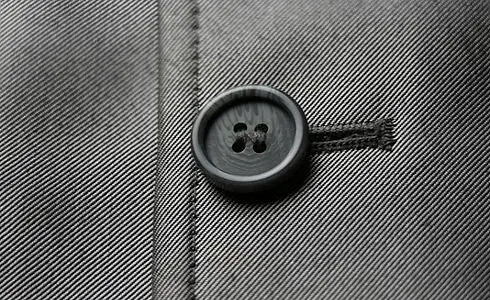
A buttonhole may occupy only a small area of a shirt, jacket, uniform, or other garment, but its construction can affect both appearance and everyday usability.
If a buttonhole is too small, the button may be difficult to close. If it is too large, the button may slip out during movement. Poor positioning can also cause the front placket to pull, twist, or appear uneven.
For custom apparel buyers, buttonholes should therefore be treated as a production specification rather than a minor finishing detail.
The Button and Buttonhole Must Be Designed Together
The buttonhole cannot be specified independently from the button.
The button’s diameter, thickness, shape, and intended function all affect the required buttonhole dimensions.
A buyer should therefore provide the manufacturer with the actual button specification whenever possible.
For custom shirts, uniforms, jackets, or polo-style garments, the buttonhole should be checked with the actual production button rather than a visually similar substitute.
Check Buttonhole Size
The first practical check is whether the button passes through the opening smoothly.
A sample should be tested several times rather than only once.
Buyers can check:
- Whether the button passes through without excessive force
- Whether the opening is too loose
- Whether the fabric stretches around the opening
- Whether the button remains secure after fastening
- Whether repeated opening causes visible damage
This simple test can reveal problems before bulk production begins.
Position and Spacing Matter
Buttonholes need consistent placement.
On garments with multiple buttons, uneven spacing can become immediately visible.
The position also affects how the garment closes. If the buttonhole and button positions do not correspond accurately, the placket may pull or become distorted.
For custom apparel, buyers should check:
- Distance from the garment edge
- Distance between buttonholes
- Alignment
- Orientation
- Position relative to seams
- Position relative to design details
A measurement drawing can help reduce ambiguity during production.
Horizontal or Vertical?
Buttonhole orientation depends on the garment design and location.
Different garment areas can require different orientations depending on how the closure is expected to handle movement and stress.
For this reason, buyers should not assume that every buttonhole on a garment should have the same orientation.
The technical specification should indicate the intended direction where it matters.
Stitch Density and Edge Coverage
The stitched area around a buttonhole should provide a clean and secure edge.
Uneven stitching can affect appearance, while insufficient coverage can leave the fabric vulnerable to fraying.
Buyers should inspect:
- Stitch consistency
- Edge coverage
- Clean cutting
- Loose threads
- Symmetry
- Overall appearance
This is particularly important for garments where buttonholes are highly visible.
Interfacing Can Influence Buttonhole Performance
Buttonholes are often placed in areas where additional fabric support may be required.
Interfacing can help stabilize the material and provide a more suitable base for the buttonhole construction.
However, the correct solution depends on the fabric and garment design.
A lightweight shirt fabric and a structured jacket fabric may require very different approaches.
The important point for buyers is that buttonhole performance should be evaluated together with the surrounding fabric construction rather than as an isolated sewing operation.
Test the Garment Before Bulk Production
A buttonhole that looks acceptable on a table may behave differently during actual use.
For custom apparel, buyers can conduct a simple sample test:
Step 1: Fasten and unfasten every button several times.
Step 2: Check whether the buttonhole stretches or becomes distorted.
Step 3: Wear the garment and perform normal movements.
Step 4: Check whether the front placket pulls around the buttons.
Step 5: Inspect the buttonhole after repeated use.
This process can be especially useful for uniforms and team apparel that will be worn frequently.
Common Problems Buyers Should Watch For
Some common buttonhole issues include:
- Incorrect buttonhole length
- Uneven spacing
- Loose threads
- Frayed cut edges
- Uneven stitching
- Incorrect orientation
- Poor alignment with buttons
- Fabric distortion
- Insufficient reinforcement
These issues are usually easier to correct during sampling than after bulk production.
What Should Be Included in the Tech Pack?
A useful buttonhole specification can include:
- Button size
- Button type
- Buttonhole dimensions
- Buttonhole orientation
- Position
- Spacing
- Stitch appearance
- Reinforcement requirements
- Fabric/interfacing requirements
If a physical reference garment is available, photographs and measurements can provide additional clarification.
Our Approach to Custom Apparel
For custom garments using buttons, we treat buttonholes as part of the closure system rather than simply a sewing detail.
During sample development, the button, fabric, interfacing, buttonhole dimensions, and placement should be evaluated together. Once the sample is approved, these details can become part of the production reference used for bulk manufacturing.
This approach helps reduce avoidable revisions and keeps small construction details aligned with the overall garment design.
Conclusion
Buttonholes are easy to overlook because of their small size, but they can strongly influence garment usability and appearance.
Before approving a custom apparel order, buyers should check the buttonhole against the actual button, inspect its position and stitching, and test the closure through repeated use.
Small details can make a significant difference when hundreds or thousands of garments are produced.