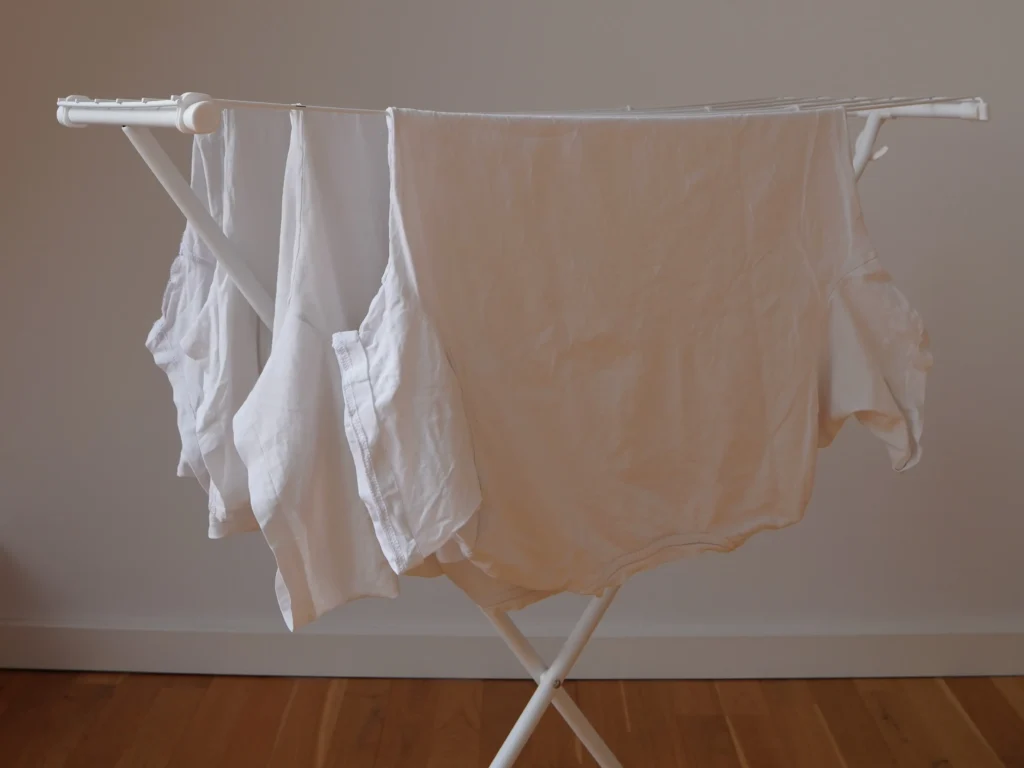
A T-shirt may look perfectly straight when it leaves the production line, but after several washes, its side seams may begin to rotate toward the front or back. This problem is commonly known as fabric spirality or garment twisting.
For custom T-shirt suppliers, side seam twisting is an important quality issue because it changes the garment’s appearance and can make the shirt hang unevenly.
1. Understand What Causes Side Seam Twisting
Spirality is related to the structure and internal tension of knitted fabrics.
In single jersey fabric, the knitted loops can develop an angled arrangement due to yarn twist and knitting conditions. During washing and relaxation, these forces may cause the fabric to rotate.
As a result, the side seams no longer remain in their original vertical positions.
This is not necessarily a sewing-machine problem. The source may be the yarn, knitting process, fabric finishing, or cutting preparation.
2. Pay Attention to Fabric Spirality Before Cutting
Checking fabric appearance alone is not enough.
A fabric roll may appear acceptable before washing but reveal twisting after relaxation or laundering.
Suppliers should evaluate the fabric before bulk cutting and check whether the wale direction remains sufficiently straight.
For single jersey T-shirts, this is particularly important because the fabric structure can be more sensitive to torque.
3. Maintain the Correct Cutting Direction
The fabric panels should be aligned carefully with the intended grain or wale direction.
If the panels are cut at an angle, the finished garment may develop additional distortion.
Cutting accuracy cannot eliminate all fabric-related spirality, but poor alignment can make the problem worse.
The front and back panels should also be checked for consistent orientation.
4. Evaluate Fabric Finishing
Fabric relaxation and finishing can influence the final stability of knitted materials.
Compacting and other suitable finishing processes may help control dimensional changes, depending on the fabric construction.
Suppliers should communicate with fabric mills about the material’s spirality performance and evaluate the finished fabric rather than relying only on its original specifications.
5. Conduct Washing Tests on Finished T-Shirts
A garment that looks correct before washing may not maintain the same appearance afterward.
A practical quality evaluation should include:
- Measuring the original side seam position
- Washing and drying under a defined procedure
- Checking whether the side seams rotate
- Comparing the front and back panel alignment
- Inspecting whether the hem remains level
The testing procedure and acceptance criteria should be established before production.
6. Check the Finished Garment from Multiple Angles
During final inspection, lay the T-shirt flat and compare both side seams.
Then hang the garment naturally to see whether the body falls evenly.
Check whether the side seams remain close to their intended positions and whether the hemline looks balanced.
Conclusion
Side seam twisting can significantly affect the appearance of custom T-shirts after washing. By checking fabric spirality, controlling cutting direction, evaluating finishing performance, and conducting garment wash tests, suppliers can reduce the risk of twisted and uneven shirts.