

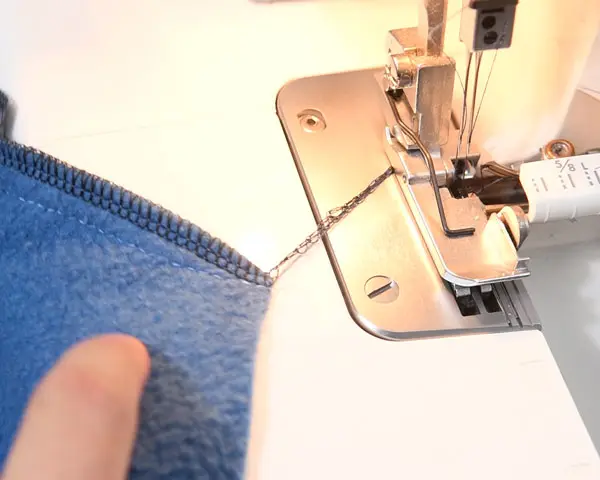
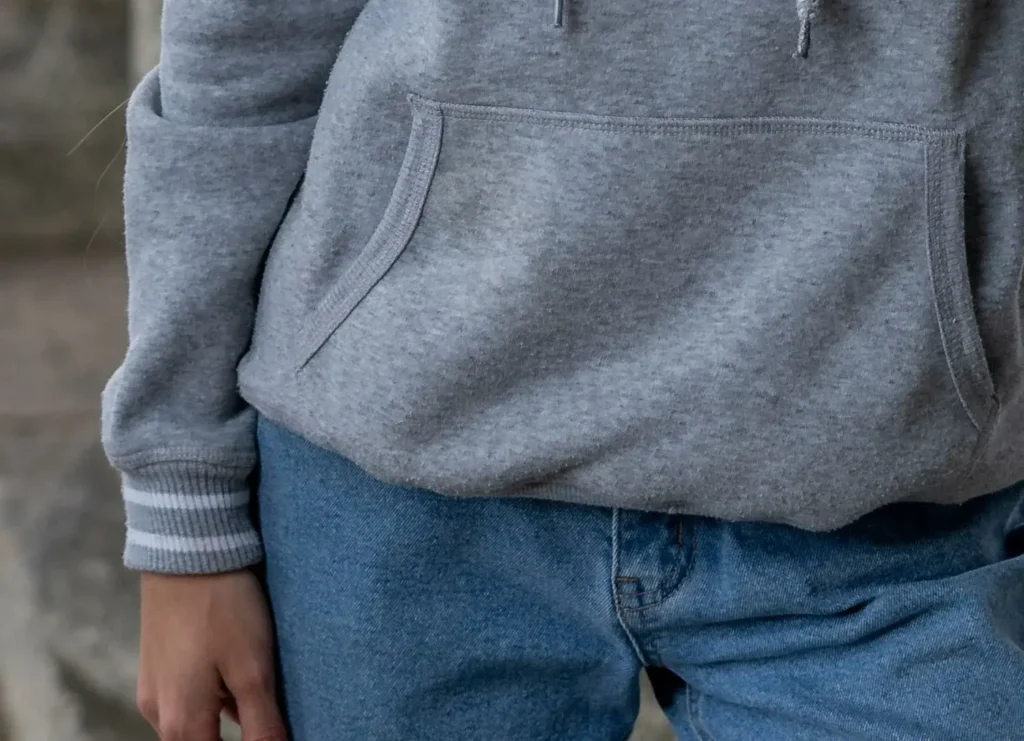
Rib knit trim is widely used in sweatshirts, jackets, polo shirts, and other custom apparel. It is commonly found at cuffs, necklines, and garment hems.
Although ribbing may appear to be a simple finishing component, its width, stretch, and recovery have a direct influence on the finished garment. Poorly selected ribbing can make an otherwise well-designed garment look loose, tight, or unbalanced.
1. Select a Suitable Rib Knit Structure
Rib fabrics are knitted with alternating raised and recessed columns. Common structures include 1×1 rib and 2×2 rib.
Different structures create different visual textures and stretch characteristics. The best choice depends on the garment style, fabric weight, and desired appearance.
For example, a sweatshirt may use a more substantial rib band, while a lightweight top may require a finer and less bulky finish.
2. Determine the Finished Width
The width of ribbing affects the proportions of the garment.
A wide hem band can create a more defined silhouette, while a narrow band produces a subtler finish. Cuff width also changes the visual balance between the sleeve and the hand.
Suppliers should consider the body proportions and garment design when determining the finished width.
The width should be evaluated after the ribbing is attached and folded, rather than only by looking at the flat fabric strip.
3. Evaluate Stretch and Recovery
Stretch describes how far the ribbing can extend. Recovery describes how well it returns to its original dimensions after being stretched.
Both properties matter.
Ribbing with insufficient stretch may be difficult to put on or may feel restrictive. Ribbing with poor recovery may become loose after repeated wear.
A practical sample evaluation should include repeated stretching and release, followed by checking whether the ribbing returns close to its original shape.
4. Match Ribbing to the Main Fabric
The ribbing should be compatible with the garment fabric in weight, thickness, and appearance.
If the ribbing is much heavier than the body fabric, the seam may become bulky. If it is too light, the edge may lack enough support.
Color matching is also important. Even when two fabrics are described as the same color, differences in fiber composition, dyeing, and surface texture may create visible contrast.
5. Control the Attachment Process
Ribbing is usually attached under controlled stretching so that it fits the garment opening.
The amount of stretching should be consistent. Excessive stretching can distort the garment edge, while insufficient stretching may leave the finished band loose.
The seam should also remain comfortable against the body. A bulky or poorly finished seam at the neckline or cuff can affect the wearing experience.
6. Inspect After Washing and Wearing
Ribbing should be checked after laundering because shrinkage and recovery can change its dimensions.
Useful inspection points include:
- Whether the band remains evenly distributed
- Whether the seam becomes wavy
- Whether the cuff retains its opening size
- Whether the neckline loses its shape
- Whether the hem band twists or stretches unevenly
Testing the ribbing together with the main garment fabric is more meaningful than evaluating the two materials separately.
Conclusion
Rib knit trim contributes to both garment appearance and functionality. By selecting appropriate structures, controlling finished width, evaluating recovery, and checking attachment quality, suppliers can create custom apparel with more consistent cuffs, necklines, and hems.

