Introduction
Before placing a large custom apparel order, many buyers focus on price, MOQ, production capacity, and delivery time.
These factors are important, but they do not always reveal whether a manufacturer can actually turn a design into a repeatable production product.
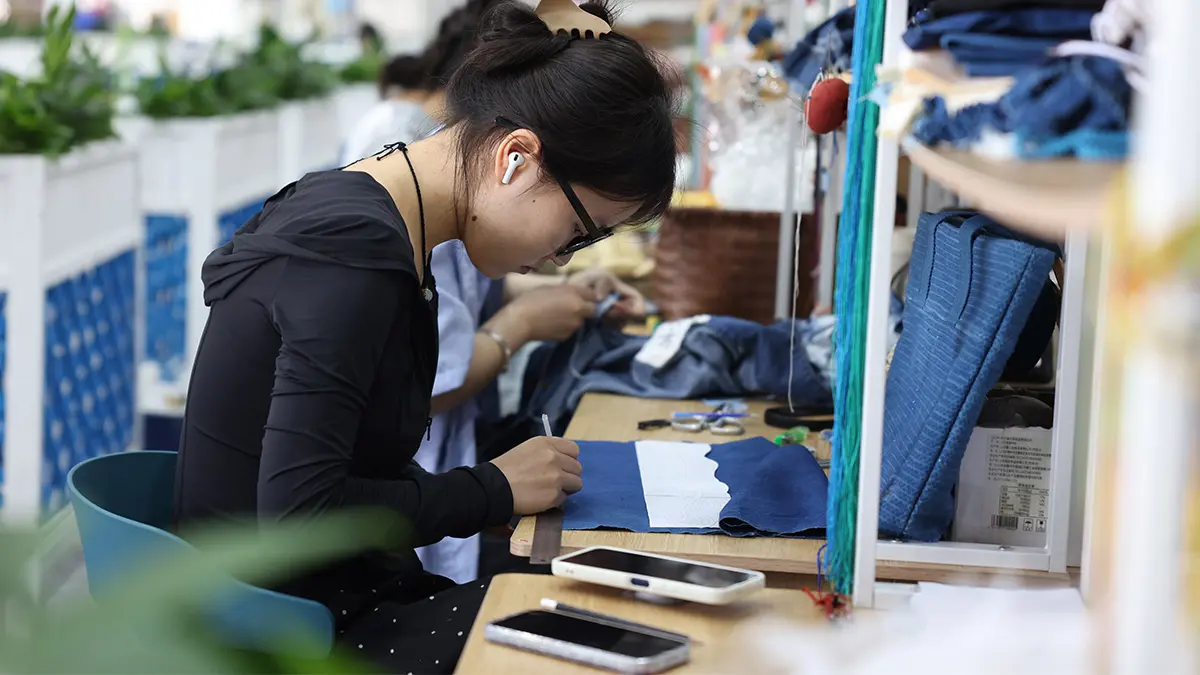
The sample room is one of the places where buyers can see this capability more clearly.
A sample room is where garment concepts are converted into physical products for evaluation. It can involve pattern development, sample cutting, sewing, fitting, construction adjustments, and technical revisions.
For a B2B buyer, evaluating the sample room is therefore not simply about checking whether a factory can make one attractive sample. It is about understanding whether the factory can develop a product accurately and prepare it for bulk production.
1. Look at the Sample Development Process
A capable factory should be able to explain how a new garment moves through development.
The process may include:
- Design review
- Pattern development
- Material confirmation
- First sample
- Fit evaluation
- Revision
- Pre-production sample
- Production handover
The exact process can vary depending on the garment.
The important point is that the factory should have a recognizable workflow rather than relying entirely on informal communication.
A sample should become a reference for later production, not simply a one-time demonstration.
2. Evaluate Pattern-Making Capability
Pattern development has a direct relationship with garment shape and construction.
When reviewing a factory, buyers can ask:
- Who develops the pattern?
- How are pattern revisions recorded?
- How are measurements checked?
- Can the factory work from technical drawings or tech packs?
- How are different garment sizes developed?
- How are construction changes communicated to the sewing team?
A factory does not necessarily need a particular software system to be capable.
What matters is whether the pattern-development process can consistently convert product requirements into production-ready patterns.
3. Review Actual Sample Evidence
Do not evaluate a factory only from photographs of finished garments.
Ask to see examples of actual development work where possible.
Useful evidence may include:
- First sample
- Revised sample
- Final approved sample
- Pattern information
- Measurement sheets
- Construction details
- Sample revision records
The purpose is to understand how the manufacturer responds when the first version is not correct.
A strong development process is not necessarily one where the first sample is perfect.
It is one where problems are identified, communicated, corrected, and controlled.
4. Pay Attention to Revision Management
Custom apparel almost always involves revisions.
A sleeve may need to be adjusted.
A pocket may need to move.
A neckline may need to change.
A logo may need to be repositioned.
A fabric may need to be replaced.
These changes can become confusing if the factory does not maintain clear version control.
Buyers should ask how the factory distinguishes:
- Original sample
- Revised sample
- Approved sample
- Pre-production sample
Dates, version numbers, photographs, measurement specifications, and written comments can all help prevent an outdated version from being used.
5. Check Whether the Sample Is Suitable for Bulk Production
A sample can look excellent while still being difficult to manufacture efficiently.
For example, a construction detail may require excessive manual work or special operations that are difficult to reproduce consistently.
Therefore, buyers should ask:
Can this sample be manufactured repeatedly at the required volume?
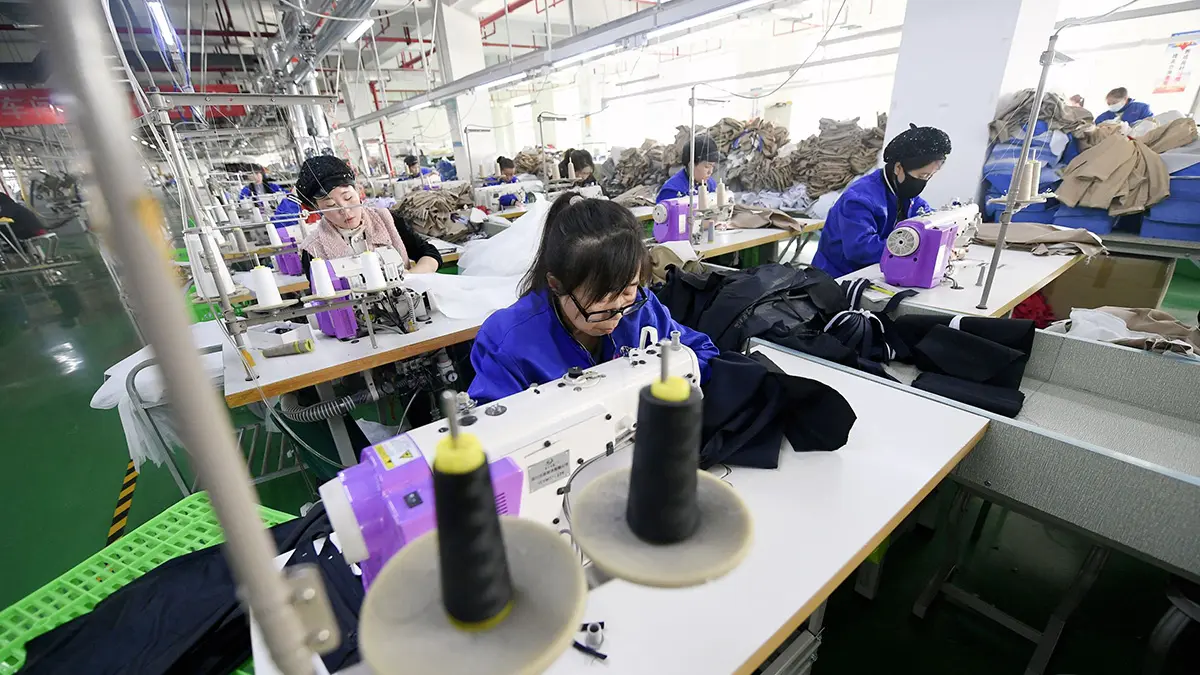
The factory should be able to identify potential production problems before bulk cutting begins.
This is one reason sample development is so important.
Research on apparel product development also emphasizes the role of sampling in identifying material, construction, fit, and manufacturing issues before production.
6. Check Communication Between the Sample Room and Production
A sample should not remain isolated inside the development department.
Once the product is approved, production personnel need to understand what was approved.
Ask how the factory transfers information from:
Sample Room → Technical Team → Production → Quality Control
The clearer this handover is, the less likely it is that production workers will interpret important details differently from the approved sample.
7. Ask About Product-Specific Experience
A factory may be experienced in apparel manufacturing but have limited experience with your particular product.
For example, producing:
- Basic T-shirts
- Team jerseys
- Hoodies
- Workwear
- Sportswear
- Jackets
can involve very different construction requirements.
When evaluating a supplier, look for experience relevant to your actual product category.
A factory’s sample portfolio can therefore be more useful than a generic statement such as “We manufacture all kinds of clothing.”
8. Evaluate the Sample Room Remotely
International buyers do not always have the opportunity to visit a factory.
A remote evaluation can still provide useful information.
Ask the manufacturer for:
- Current sample-room photographs
- Video walkthrough
- Sample development examples
- Revision examples
- Measurement documents
- Production-ready sample examples
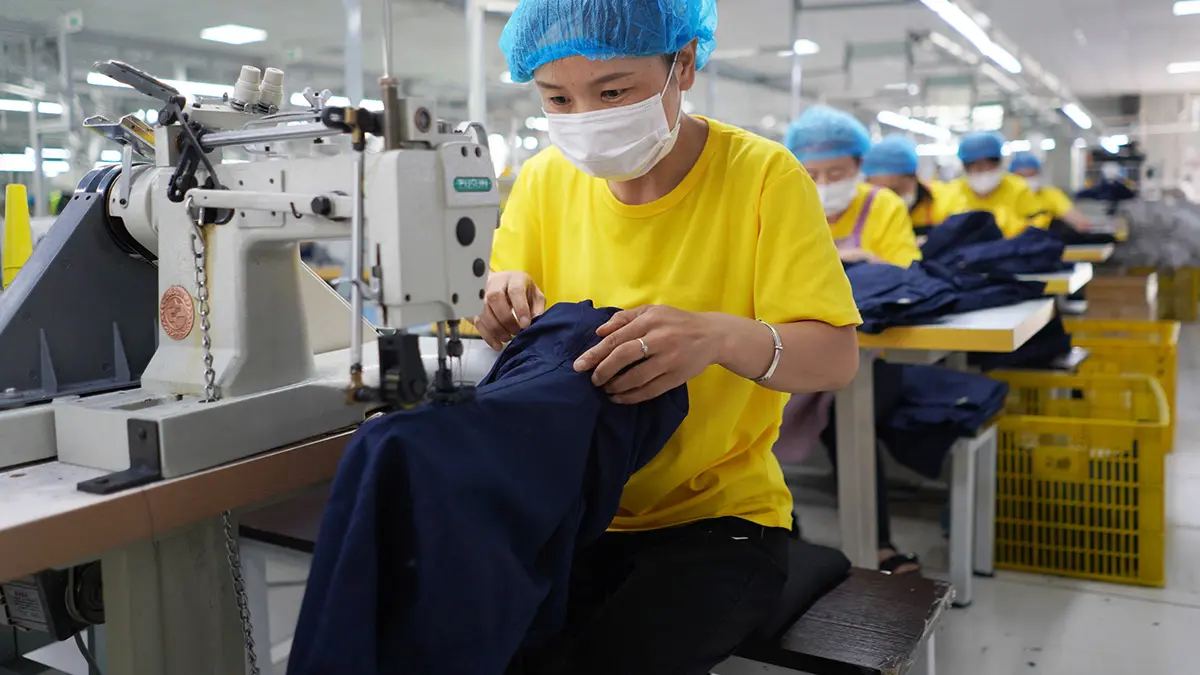
A live video call can be particularly useful because the buyer can ask the factory team to show current work rather than relying only on prepared marketing photographs.
What Buyers Should Ask Before Approval
Before moving from sampling to bulk production, consider asking:
- Which sample is the current approved version?
- Are all material specifications confirmed?
- Are measurements documented?
- Are construction details documented?
- Are trims confirmed?
- Are decoration specifications confirmed?
- Has the factory reviewed production feasibility?
- Does the production team have access to the approved reference?
These questions help turn a sample into a real production standard.
Our Approach to Custom Apparel
Our approach to custom apparel development is to use the sample stage as a practical checkpoint between design requirements and bulk manufacturing.
The objective is to clarify construction, materials, appearance, measurements, and other important product details before production begins.
Once the sample is approved, the relevant information can be carried forward as the reference for bulk production.
Conclusion
A factory sample room is more than a place where prototypes are sewn.
For B2B buyers, it can provide valuable evidence about a manufacturer’s technical capability, communication process, revision management, and readiness for bulk production.
Instead of asking only whether a factory can make a sample, ask a more important question:
Can the factory turn the approved sample into a repeatable production standard?
That distinction can make supplier evaluation much more useful.