

Introduction
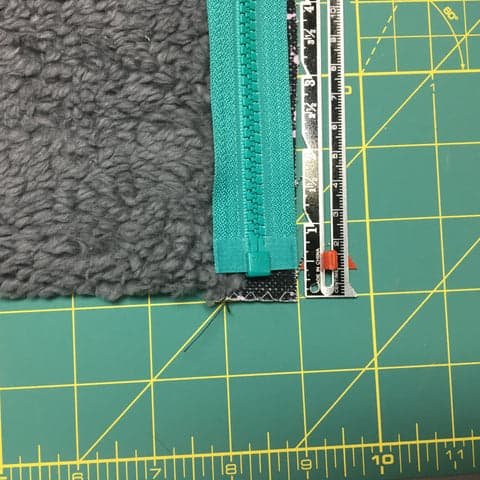
A zipper chin guard is a fabric component positioned near the top of a jacket zipper. Depending on the design, it may cover the zipper slider or create a softer barrier between the closure and the wearer’s chin.
This feature is common in jackets, fleece tops, outdoor clothing, and some children’s outerwear.
Although the component is small, poor design can leave the zipper exposed, create a bulky neckline, or make the top of the jacket uncomfortable. For custom apparel buyers, the chin guard should be reviewed as part of the complete zipper and neckline construction.
1. Confirm the Required Coverage
The chin guard should provide the intended coverage without interfering with the zipper.
Buyers should specify the guard’s finished height, width, and position relative to the top of the zipper. The design should clarify whether the guard covers only the slider or also shields part of the zipper teeth.
The exact dimensions depend on the jacket design, zipper type, and intended fit.
A technical drawing should show the guard in both its open and closed positions. This helps the manufacturer understand how the component should behave when the wearer uses the zipper.
2. Check the Relationship With the Zipper Slider
The guard must work with the actual zipper slider and the finished zipper length.
If the guard is too small, the slider may remain exposed. If it is too large, it may fold awkwardly, interfere with the collar, or make the neckline look bulky.
Buyers should inspect:
- Whether the slider is adequately covered
- Whether the zipper can open and close smoothly
- Whether the guard catches in the slider
- Whether the guard folds neatly when the jacket is open
- Whether the top of the zipper remains secure
The sample should use the intended zipper model or an approved equivalent, not an unrelated substitute.
3. Select a Suitable Contact Fabric
The inner surface of the chin guard may touch the wearer’s face.
A soft fabric or lining can improve comfort, but it must also be compatible with the jacket’s construction and care requirements.
Buyers should confirm the material, surface texture, thickness, and color of the contact area.
For garments intended for cold-weather use, the guard may need to work with a thicker collar or lining. The extra layers should not create excessive bulk or prevent the collar from sitting correctly.
4. Inspect the Edges and Stitching
The guard should have clean edges and secure seams.
Poorly finished edges may fray, while thick or uneven stitching can create a rough area near the face.
During sample approval, check:
- Edge finishing
- Seam consistency
- Loose threads
- Exposed raw edges
- Puckering around curved corners
- Whether the finished guard lies flat
If the design uses a rounded or shaped guard, the curved edge should be checked carefully because uneven stitching may become more visible there.
5. Evaluate Comfort When the Jacket Is Fully Zipped
The chin guard should be evaluated in the position in which it will actually be used.
Ask the wearer to zip the jacket fully and check whether the guard sits comfortably below the chin. The top of the zipper should not create an unexpected pressure point.
Also check whether the collar pushes the guard against the face or whether the guard folds inward and exposes the slider.
For jackets with high collars, hoods, or thick linings, the relationship between these components deserves particular attention.
6. Check Compatibility With the Front Closure
Some jackets include a storm flap, an inner facing, a lining, or a protective layer behind the zipper.
The chin guard must fit into this construction without creating a thick or uneven top edge.
Buyers should confirm the order in which the zipper, guard, facing, and lining are assembled. This is especially useful when several layers meet at the neckline.
A physical sample should demonstrate the finished assembly rather than only the isolated guard component.
7. Test Repeated Use and Washing
The chin guard may be folded, pressed, and exposed to repeated zipper movement during everyday wear.
Before approving bulk production, test the jacket by opening and closing the zipper repeatedly. Check whether the guard maintains its shape and whether the stitching remains secure.
After the intended care process, inspect for shrinkage, curling, color change, and distortion around the zipper top.
If the guard and body use different fabrics, confirm that they remain compatible after washing.
8. What Should Be Included in the Tech Pack?
A useful specification should include:
- Guard dimensions and shape
- Position relative to the zipper slider
- Outer and inner fabric details
- Edge-finishing method
- Stitching requirements
- Relationship with the collar, facing, and lining
- Reference photographs
- Approved sample criteria
If the design includes different zipper lengths or collar shapes across several styles, specify whether the guard dimensions need to change accordingly.
Our Approach to Custom Apparel
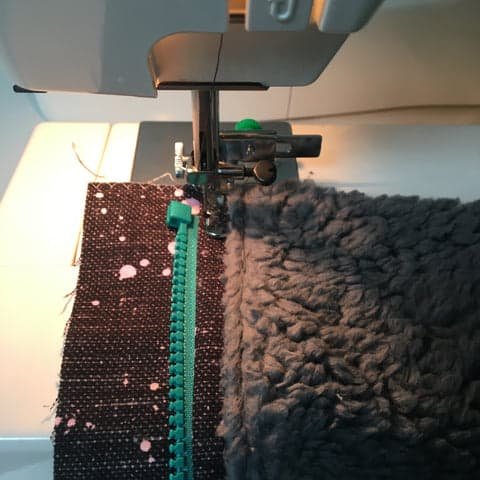
For custom jackets and outerwear, the zipper chin guard should be approved together with the zipper, collar, lining, and front closure. Testing the complete assembly helps buyers confirm that the guard provides the intended coverage without creating discomfort or interfering with zipper operation.
Conclusion
A zipper chin guard is a small component that can improve the finish and comfort of a jacket.
Before approving bulk production, buyers should confirm its coverage, material, stitching, and relationship with the zipper slider, then test the finished jacket in both open and closed positions.