Introduction
Reversible apparel offers two looks in one garment, making it an attractive option for team jackets, promotional clothing, outdoor wear, and fashion collections. However, a reversible garment is more complicated to develop than a standard garment because both sides may be visible during normal use.
A pocket, label, seam, or decorative detail that looks correct on one side may be unattractive or uncomfortable on the other. Buyers should therefore treat reversibility as a core design requirement rather than a finishing feature added at the end.
Before requesting samples or production quotations, clarify the intended use of both sides and how the garment should function when turned inside out.
1. Define the Purpose of Each Side
Start by deciding whether both sides should look equally finished or whether one side is intended to be more prominent.
For example, a team jacket might use one side for the home team and the other for the away team. A promotional jacket may combine a branded exterior with a simpler alternative appearance.
Prepare a design view for each side. Identify the colors, materials, pockets, closures, and decorative details that belong to each version.
Avoid relying on a single front-view image. The supplier needs enough information to understand the complete garment when worn in either direction.
2. Plan Seams and Interior Finishing
In a conventional garment, some internal construction details remain hidden. In a reversible garment, those details may become visible.
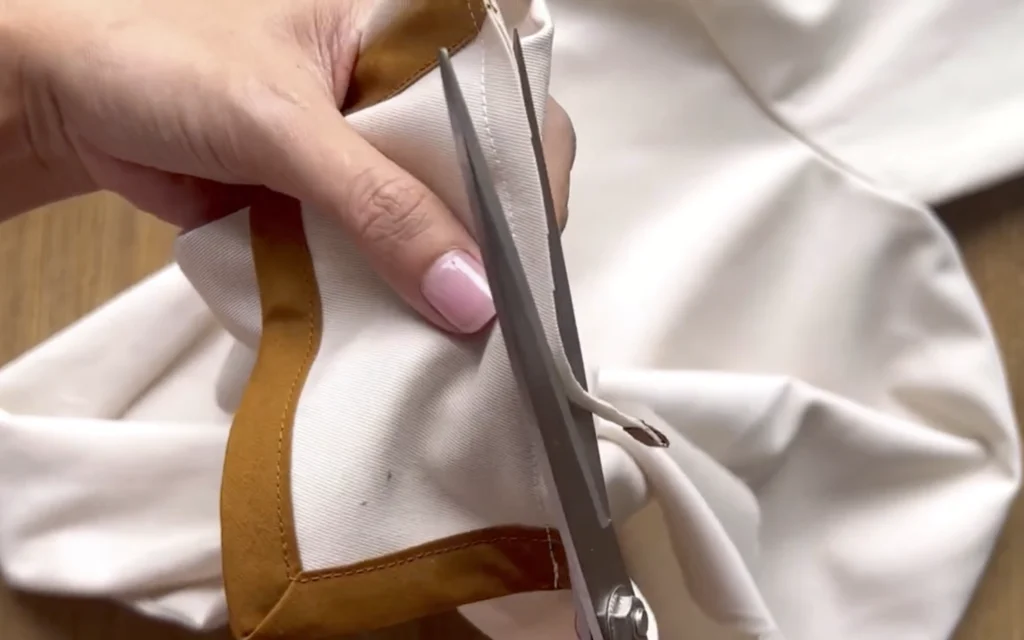
Ask the supplier to explain how the seams will be finished and whether the construction will remain neat on both sides. Confirm whether seam allowances, exposed stitching, and joining points are acceptable for the intended design.
The approved sample should be inspected inside out as well as in its normal orientation.
3. Decide How Pockets Will Work
Pocket design is one of the most important decisions in reversible apparel.
Consider whether both sides need usable pockets, whether the pockets should share an opening, and whether pocket bags or stitching will be visible on the opposite side.
For each pocket, confirm its opening direction, dimensions, placement, and intended use. If the garment uses different pocket designs on the two sides, the supplier should explain how the construction will support both configurations.
Do not assume that adding a pocket to one side automatically creates a practical pocket on the other.
4. Review Closures and Fastenings
Zippers, snaps, buttons, and other closures must be compatible with the reversible design.
Specify whether the garment needs a reversible zipper, a particular puller arrangement, or another closure solution. Confirm how the fastening will look from both sides and whether it can be operated comfortably in either configuration.
Check the actual sample rather than approving the closure based only on a component photograph.
5. Plan Branding and Labels Carefully
Conventional neck labels may become visible on the outside when the garment is reversed. Large embroidered logos or decorative elements can also create visible stitching on the opposite face.
Decide which branding elements should appear on each side. Depending on the design, options may include discreet labels, removable tags, carefully positioned decoration, or branding that is intentionally visible from both sides.
Also confirm where size and product information will be placed. The final design must balance appearance, comfort, and any applicable labeling requirements.
6. Check Fabric Compatibility and Bulk
Reversible garments may combine two fabrics or use a double-layer construction. Differences in thickness, drape, stretch, and shrinkage can affect the finished result.
Ask the supplier to evaluate the proposed fabric combination before bulk production. Pay attention to whether the garment feels excessively heavy, whether the layers move comfortably together, and whether the edges remain flat.
The approved sample should represent the intended production materials rather than temporary substitutes.
7. Test the Garment in Both Configurations
A useful sample review should include both appearance and practical use.
Check whether:
- Both sides look properly finished.
- The garment can be turned inside out without difficulty.
- Pockets work as intended in each configuration.
- Closures remain functional.
- Labels and branding appear in the agreed positions.
- The garment hangs evenly without unwanted twisting or puckering.
- The two sides remain comfortable during movement.
Record any changes against the correct side of the garment so the manufacturer can interpret the feedback accurately.
8. Confirm the Production Specification
Before approving bulk production, document the fabric combination, construction method, seam finishing, pocket configuration, closure details, branding, labels, and design views for both sides.
If the two sides use different colors or materials, identify them clearly in the specification. Photographs of the approved sample can help explain details that are difficult to describe in words.
Our Approach to Custom Apparel
For reversible jackets, teamwear, and promotional garments, the design should be evaluated as two coordinated wearing configurations. The sample review should cover both appearances, all functional components, and the finishing details that may become visible when the garment is turned inside out.
Clear specifications help the buyer and supplier identify the intended result before committing to bulk production.
Conclusion
Reversible apparel can offer practical and visual value, but only when both sides are designed as complete garments. By planning seams, pockets, closures, branding, and material compatibility early, buyers can reduce avoidable revisions and improve the consistency of the finished order.