Introduction
A custom polo shirt may look simple, but its collar and front placket require careful design decisions. These details affect how the garment frames the neck, how the neckline sits, and whether the shirt maintains a neat appearance during wear.
For corporate uniforms, sports teams, and promotional apparel, a poorly proportioned collar or uneven placket can make the finished garment look different from the intended design.
Before approving a custom polo shirt, buyers should evaluate the collar, placket, buttons, and their relationship to the overall garment.
1. Choose the Right Collar Shape
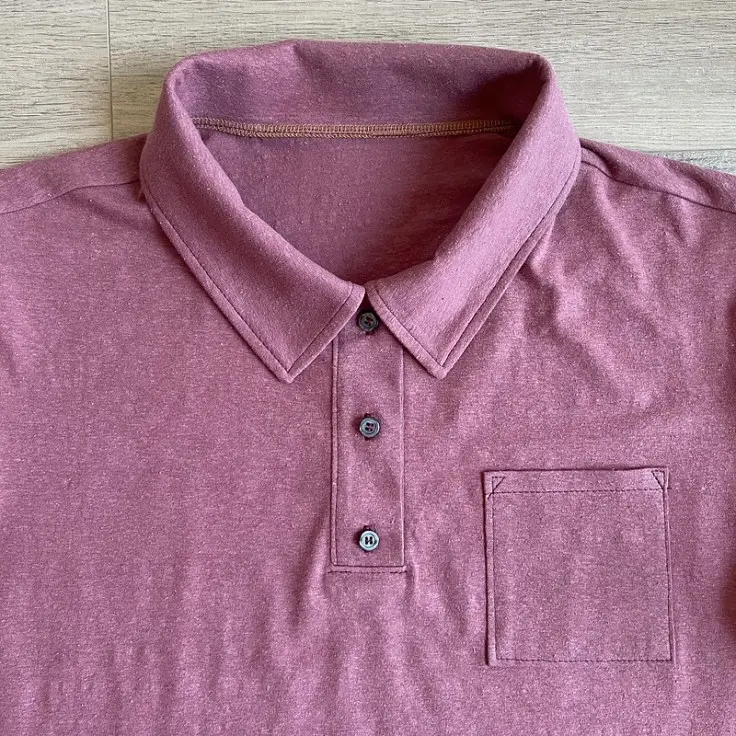
The collar determines much of a polo shirt’s visual character. A narrow collar can create a more understated appearance, while a wider or more structured collar may look more formal.
Before production, confirm:
- Collar height and point length.
- Collar shape and width.
- Whether the collar uses a separate knitted component or matching body fabric.
- Whether the collar should have a contrasting color.
- How the collar should sit when worn open and buttoned.
Reference photographs are useful, but written measurements and a physical sample provide a clearer production standard.
2. Consider Collar Stability
A collar should maintain its intended shape during normal wear. Depending on the construction, problems may include curling edges, uneven points, excessive stiffness, or a collar that does not lie as intended.
Buyers should evaluate the collar together with the main garment fabric. Differences in stretch, weight, and recovery between these components may affect how the neckline behaves.
Ask the supplier to demonstrate the proposed construction on a sample. Check the collar after wearing and after the agreed care process, rather than evaluating it only when the garment is new.
3. Specify the Placket Structure
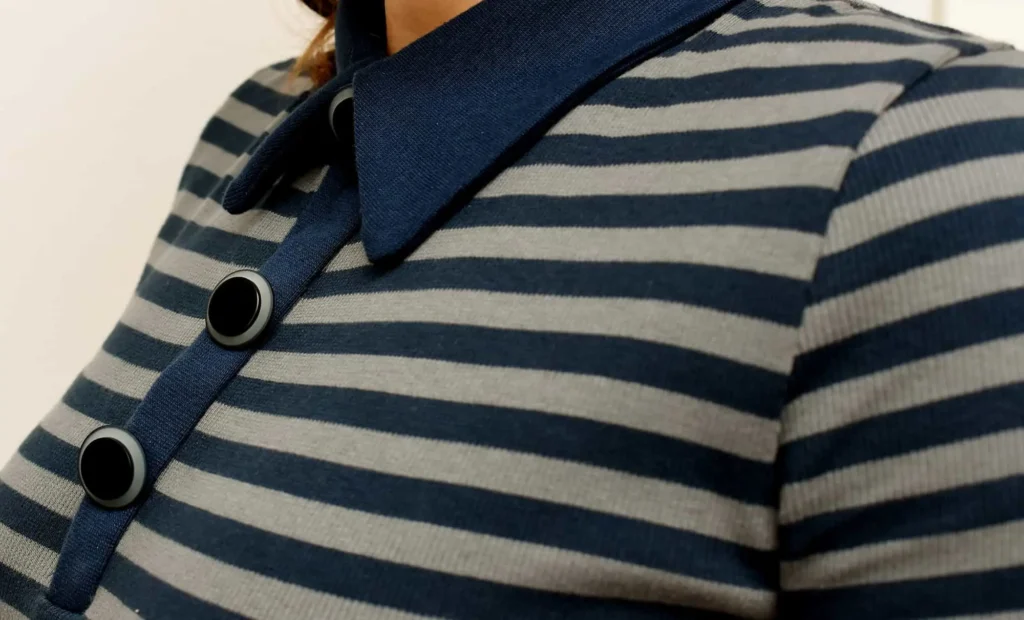
The placket is the finished opening at the front of the polo shirt. It affects both appearance and ease of dressing.
The specification should identify the placket length, finished width, number of buttons, and intended construction. If the design includes contrasting fabric, decorative stitching, or a concealed opening, these details should also be documented.
An excessively wide or narrow placket can change the balance of the garment. Poorly controlled stitching may also cause puckering, twisting, or uneven edges.
4. Check Button Size and Spacing
Buttons should be proportionate to the placket and easy to operate.
Confirm the button diameter, color, material, number, spacing, and attachment method. Buttonholes should accommodate the selected buttons without being excessively tight or loose.
The spacing should be consistent, and the top button should be positioned according to the intended neckline design. On a sample, open and close every button to check for uncomfortable tension or distortion around the opening.
5. Match the Collar and Placket Colors
When a polo shirt uses contrasting collar or placket colors, the visual relationship between the components becomes especially important.
Confirm the intended color references and review the actual materials together. Two components that look similar in separate photographs may appear different when placed next to each other under the same lighting.
If color matching is important to the company’s brand identity, approve the relevant components under consistent viewing conditions before bulk production.
6. Review the Complete Garment
A collar should not be approved independently of the rest of the polo shirt.
Check how it relates to the shoulder width, neckline, body proportions, sleeve design, and overall style. A collar that looks appropriate on a sample may appear different when used on another garment size.
For programs involving several sizes, review whether the collar and placket proportions remain visually balanced across the range.
7. Create a Clear Construction Specification
Before approving production, document the design in a specification sheet.
Include collar measurements, collar material, placket dimensions, button details, color combinations, stitching expectations, and approved reference images. Any intentional differences from the sample should be recorded clearly.
The supplier should confirm whether the requested construction is suitable for the chosen garment materials and production method.
Conclusion
The collar and placket are small components with a major influence on a custom polo shirt’s appearance. Clear measurements, suitable construction, coordinated colors, and practical sample evaluation help businesses avoid preventable differences in bulk production.
For B2B buyers, the best approach is to approve the complete garment with clearly documented construction details rather than relying on a design photograph alone.