When a company introduces custom uniforms, employees need to know how to care for the garments after delivery. If washing methods, drying practices, or maintenance responsibilities are unclear, clothing may deteriorate sooner than expected or become unsuitable for work.
For apparel suppliers, helping customers prepare a practical garment care guide is a useful way to support the uniform program beyond production and delivery.
1. Start With the Actual Garment Care Instructions
Care guidance should be based on the finished garment and its components. Different fabrics, linings, prints, embroidery, fasteners, and other details may require different treatment.
The supplier should provide the care information appropriate to the product and ensure that it aligns with the garment’s care label and applicable market requirements.
A general instruction such as “wash normally” may be insufficient when a uniform contains several materials or decorative elements. Where the garments require special handling, the customer should receive clear instructions before distribution.
2. Explain the Most Important Daily Care Steps
A practical guide should use simple language and focus on the actions employees need to take.
Depending on the garment, the guide may explain how to separate laundry, select a suitable wash temperature, use the recommended drying method, and avoid cleaning products or processes that may damage the fabric or decoration.
It should also explain how employees can identify the correct care label and what to do if a label is missing or difficult to read.
Suppliers should avoid recommending a single washing method for every garment unless the products have been designed and verified for that method.
3. Address Garments With Decoration and Special Components
Corporate uniforms may include embroidered logos, printed artwork, reflective elements, or other components that affect maintenance.
The care guide should reflect the actual construction of each garment. If different products in the uniform program have different requirements, provide a separate section or product-specific instruction rather than relying on one broad rule.
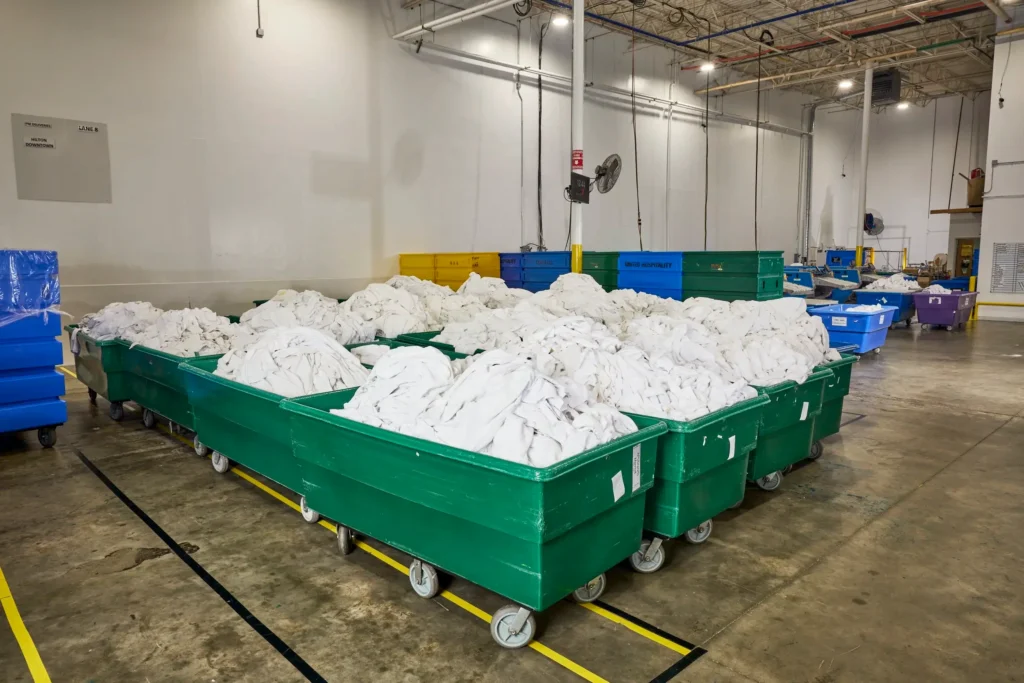
For uniforms used in demanding environments, the customer may also need a documented industrial laundering process. Any special cleaning or disinfection requirements should be confirmed against the garment’s intended use and relevant standards.
4. Clarify Who Is Responsible for Maintenance
Responsibility for washing, repairs, replacement, and storage can differ between companies and jurisdictions.
Some organizations ask employees to handle ordinary washing. Others provide centralized laundry services or manage uniforms through an external provider. The customer should decide which arrangement applies and communicate it clearly.
For uniforms required as a condition of employment, local labor rules may affect who must provide or maintain the garments. Suppliers should not assume that one country’s arrangement applies everywhere. Customers should check the applicable requirements in each operating location.
5. Make the Guide Easy to Use
A long technical document is unlikely to help employees if they cannot quickly find the relevant instruction. A more practical approach is to provide:
- A short guide for everyday care
- Product-specific instructions for garments with different requirements
- A contact point for questions about damaged or unusual garments
- Clear steps for reporting garments that need repair or replacement
The guide can be distributed digitally or alongside the uniform issue, depending on the customer’s internal process.
6. Review Feedback After the Uniform Rollout
Questions from employees may reveal that an instruction is unclear or that a garment is being used in an unexpected way.
The supplier can help review recurring concerns and determine whether they relate to care instructions, product construction, or an operating practice. Any change to the recommended cleaning process should be checked against the garment’s verified care requirements.
A clear feedback process helps the customer improve the uniform program without making unsupported assumptions about the cause of every damaged garment.
Conclusion
A garment care guide helps turn a custom clothing order into a more manageable long-term program. By providing product-specific instructions, clarifying maintenance responsibilities, and making guidance easy to follow, suppliers can help corporate customers care for their uniforms more consistently.