Introduction
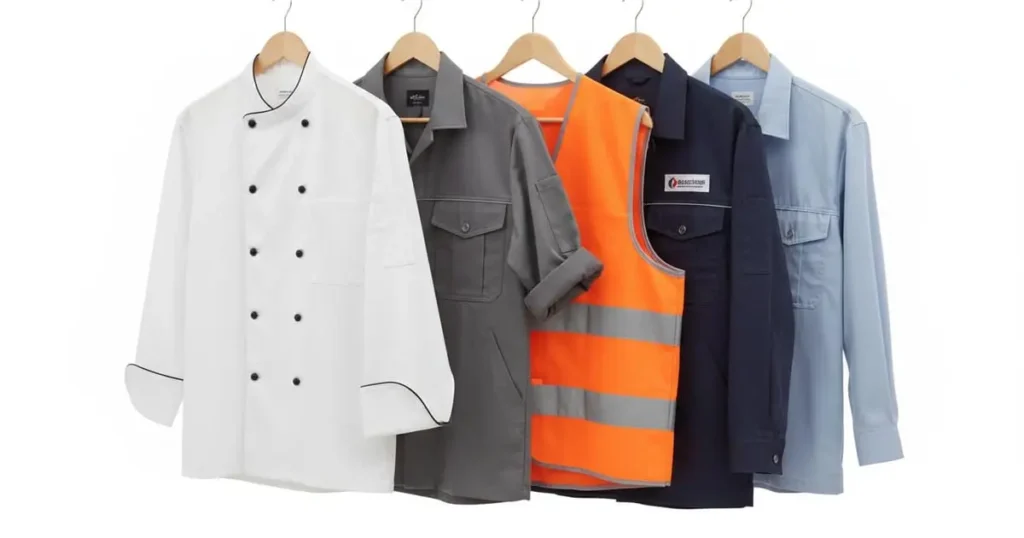
A company may want employees to look coordinated without requiring every person to wear exactly the same garment. Reception staff, sales representatives, warehouse employees, technicians, and managers may work in different environments and perform different tasks.
A single uniform style may not meet every group’s needs. On the other hand, allowing every department to choose independently can result in inconsistent colors, branding, and overall appearance.
Role-based uniform planning provides a middle ground: a shared corporate identity with clearly defined garment options for different employee groups.
1. Map Garment Requirements to Actual Job Duties
Start by identifying the main employee groups included in the project. Consider where employees work, how they interact with customers, and what movements or tasks their clothing must accommodate.
For example, employees who spend most of their time in an office may prioritize a polished appearance, while staff who move frequently between indoor and outdoor environments may need more practical layers.
The goal is not to create a different garment for every job title. Instead, group employees with similar clothing requirements so that the range remains manageable.
2. Create a Clear Garment Matrix
Prepare a matrix showing which garment options apply to each employee group.
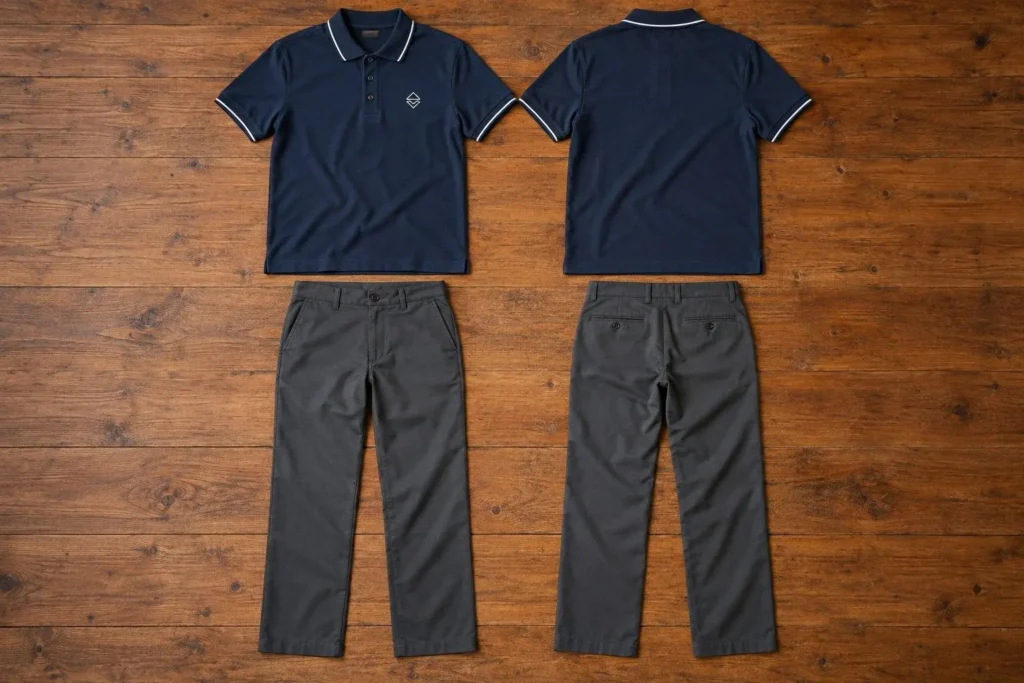
A matrix might specify polos for warehouse staff, shirts for customer-facing employees, and optional outer layers for employees who work in cooler environments. These are examples rather than universal recommendations; the appropriate choices depend on the company’s operations.
For each garment, identify the approved style, color, logo treatment, and any role-specific details.
Make sure employees and department managers understand which options are permitted. A clear matrix reduces confusion during ordering and prevents unapproved combinations from entering the program.
3. Keep Branding Consistent Across Different Styles
Different garment styles do not have to look identical to belong to the same corporate clothing program.
Consistency can come from approved colors, logo artwork, typography, and a defined approach to logo placement. However, the actual decoration area may differ between a shirt, jacket, polo, or other garment.
Ask the supplier to provide placement references for each style. Review the garments together to confirm that the brand remains recognizable without forcing the same layout onto every product.
If a department needs a different color or a visible role identifier, document that distinction as part of the approved design system.
4. Distinguish Role Identifiers From Personalization
Some companies use role names, department labels, or employee names on garments. These details should be clearly defined rather than left to informal interpretation.
Specify the exact wording, placement, font, and color for each identifier. If role titles may change frequently, consider whether printing them directly onto garments will create future replacement costs.
Where different departments use similar titles, ensure the wording is understandable to employees and customers. Any role identifier should reflect the company’s approved internal naming conventions.
5. Avoid Unnecessary Style Proliferation
Too many garment options can make procurement, inventory management, and future reordering more complicated.
Before approving a new style for a particular department, determine whether an existing approved garment can meet the requirement. If a separate style is necessary, document the reason and clarify who is authorized to request it.
A manageable set of options can simplify size planning and make it easier to consolidate purchasing across departments.
6. Approve the Complete Program Before Bulk Ordering
Review the role matrix, garment samples or visual references, approved artwork, and quantity allocation together.
Confirm that each employee group has a defined set of options and that the purchase order matches the approved plan. If the company expects future changes, record which elements are standard and which can be revised with authorization.
Conclusion
Role-based corporate uniforms work best when employee needs and brand consistency are planned together. Buyers should group similar job requirements, define approved garment options, standardize identifiers, control the number of styles, and review the full program before ordering.
This approach helps companies create a coherent appearance without overlooking differences between departments.