Introduction
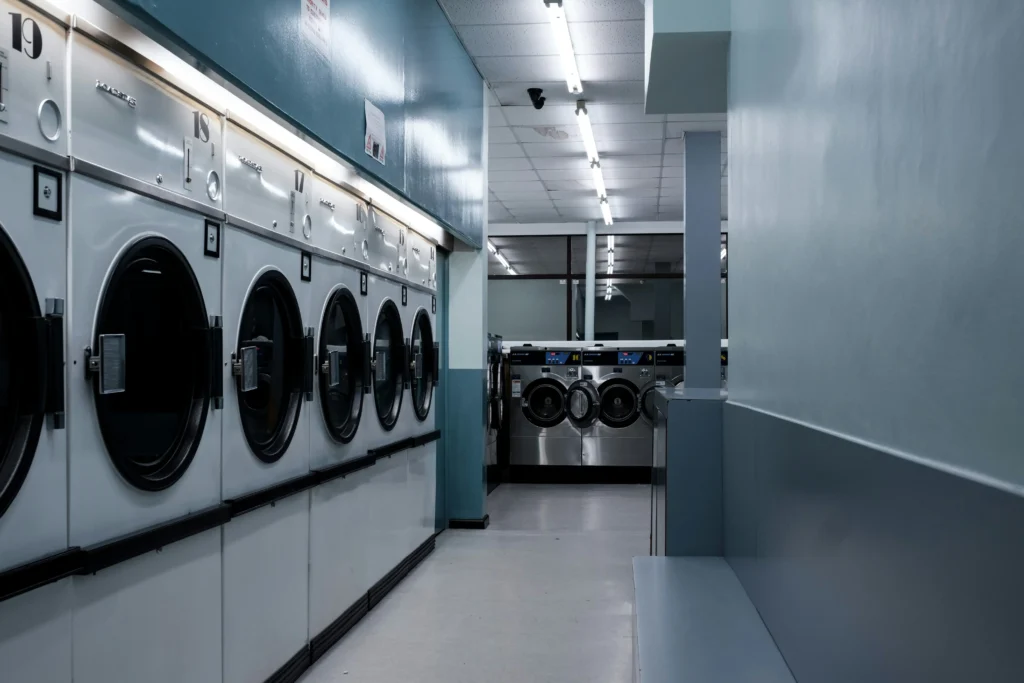
When a company orders uniforms for employees, the purchase price is only one part of the long-term cost. Garments may need to withstand repeated cleaning, scheduled collection, sorting, drying, storage, and redistribution. These requirements are especially important for organizations that use centralized laundry services or industrial washing facilities.
A garment that performs well under household washing instructions may not necessarily be suitable for a different commercial laundering process. Temperature, chemicals, mechanical action, drying methods, and handling procedures can all differ.
For B2B buyers, laundry requirements should be discussed while selecting the garment—not after the first batch begins to show unexpected changes.
1. Start by Defining the Actual Washing Process
Before choosing fabric or construction, document how the uniforms will be maintained.
Questions to answer include:
- Will employees wash garments at home, or will a professional service handle them?
- Is the process a conventional commercial wash or an industrial workwear laundry cycle?
- What washing temperatures and detergents are used?
- Are garments tumble-dried, tunnel-finished, pressed, or subjected to other finishing processes?
- How often will each garment be washed?
- Are garments sorted by color, department, or contamination risk?
There is no single washing process suitable for every uniform program. The garment specification should reflect the actual process wherever possible.
2. Why Industrial Laundering Can Affect Garment Performance
Repeated washing and finishing can expose garments to mechanical stress, heat, moisture, and chemicals. Over time, these conditions may affect several product characteristics.
Dimensional stability
A garment may shrink, stretch, or change shape. These changes can affect fit and create inconsistencies between garments originally supplied in the same size.
Color appearance
Repeated laundering may lead to fading, color change, or differences between garment components. The result can be particularly noticeable in uniforms that need a consistent appearance across a workforce.
Seam and surface appearance
Puckering, wrinkles, pilling, or changes in the garment’s surface may become more visible over repeated cycles.
Trims and closures
Buttons, zippers, labels, elastic components, and decorative details may respond differently to heat and mechanical action. Their suitability should be considered alongside the main fabric.
These effects depend on the garment materials, construction, care conditions, and number of cycles. They should be evaluated rather than assumed.
3. Use Relevant Test Procedures
ISO 15797:2017, Textiles — Industrial washing and finishing procedures for testing of workwear, specifies procedures and equipment that can be used to evaluate workwear intended for industrial laundering. The standard includes a basis for assessing properties such as dimensional stability, color characteristics, creasing, seam puckering, pilling, and general visual appearance.
Buyers should discuss with their supplier or testing laboratory which procedures are appropriate for the proposed garment and the actual care process.
A test performed under one set of conditions does not automatically represent every industrial laundry system. The selected procedure should be relevant to the intended use and the product specification.
4. Create a Uniform Laundry Specification
A practical laundry specification should document more than the words “machine washable.”
Consider including:
Washing process: The intended commercial or industrial method and any important operating conditions.
Temperature range: The washing temperature that the garment is expected to tolerate under the approved process.
Detergents and chemicals: Any restrictions or requirements that are relevant to the fabric, finish, or trims.
Drying and finishing: The intended drying method and whether pressing or other finishing operations are required.
Expected service conditions: Approximate washing frequency and the intended use of the garment.
Evaluation criteria: Which changes in size, color, appearance, and construction are acceptable for the program.
Care labeling: The instructions that should be supplied with the garment and communicated to the laundry provider.
Exact limits should be agreed for the particular product. Avoid using generic thresholds without confirming that they fit the garment and the test method.
5. Evaluate Samples Under Realistic Conditions
A sample that has only been tried on cannot demonstrate long-term laundering performance.
Where the project requires it, request a trial using the intended washing and finishing conditions. Record the sample’s initial measurements and appearance, then evaluate it after the specified number of cycles.
Review points may include:
- Length and width measurements at agreed locations.
- Color changes and consistency between components.
- Seam puckering and general appearance.
- Condition of closures, labels, and other trims.
- Fit and ease of movement.
- Any changes in fabric hand feel or surface condition.
The number of cycles and the acceptance criteria should be agreed before testing. Photographs and measurement records can help buyers and suppliers discuss results objectively.
6. Consider the Whole Uniform Service Cycle
For organizations with centralized uniform programs, garment performance is also affected by how uniforms move through the system.
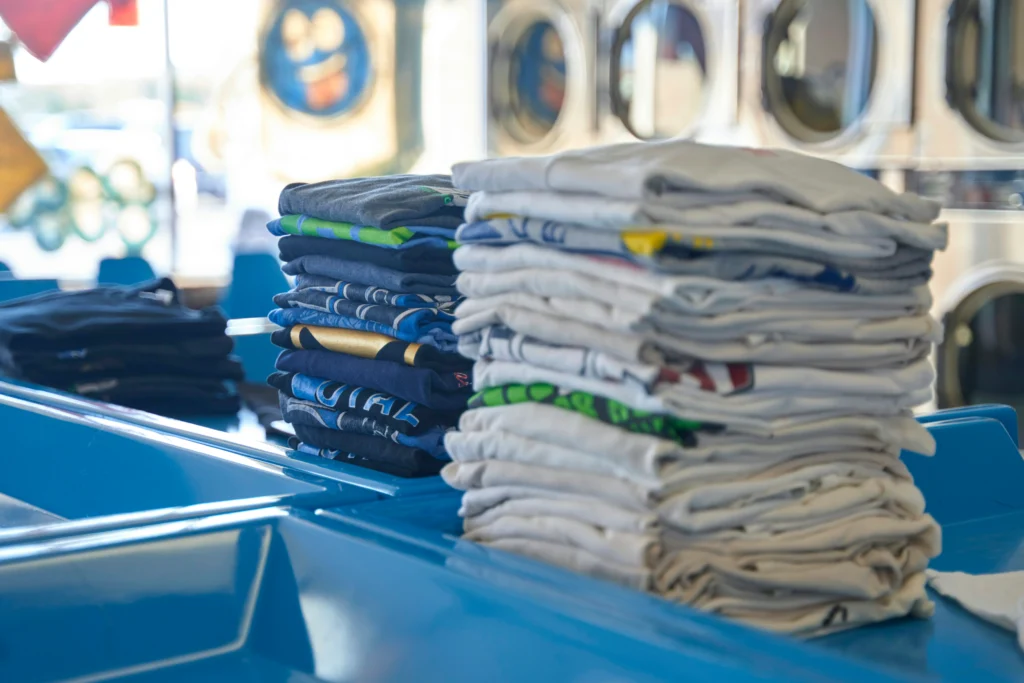
A typical cycle may include collection, sorting, washing, finishing, inspection, storage, distribution, and return to employees. Each step can influence garment handling and availability.
Buyers should consider:
- Whether garment identification is needed for individual or departmental allocation.
- How clean garments are stored and distributed.
- How damaged garments are separated for review or repair.
- Who determines whether a garment can return to service.
- How replacements are ordered when sizes or styles become unavailable.
These are operational decisions as much as product decisions. Aligning them early can reduce confusion after the uniforms enter service.
7. Calculate Value Beyond the Initial Price
A cheaper garment is not necessarily the more economical choice if it needs frequent replacement or becomes unacceptable after relatively few washing cycles.
Buyers can compare options using a broader cost model:
- Initial purchase cost.
- Expected useful service period.
- Laundering and handling costs.
- Repair and replacement requirements.
- Costs associated with inconsistent appearance or unavailable sizes.
Precise lifetime cost estimates require reliable data. If actual washing-cycle data is not available, use a small pilot program to collect evidence rather than presenting assumptions as established results.
Common Mistakes to Avoid
- Specifying only household washing instructions for garments that will be industrially laundered.
- Choosing a garment based solely on its appearance when new.
- Ignoring trims and labels when evaluating washing durability.
- Using a test procedure that does not match the intended laundry process.
- Failing to define acceptable changes after repeated washing.
- Leaving responsibility for damaged garments unclear between the buyer, supplier, and laundry provider.
Our Approach to Custom Apparel
For a uniform program with frequent laundering, the product brief should identify the expected care process before fabric and construction choices are finalized. The buyer and supplier can then agree on suitable samples, relevant test conditions, measurement points, and acceptance criteria.
Clear care instructions and consistent documentation also help the organization maintain garments after delivery. These steps create a more practical basis for evaluating long-term uniform performance than a new-garment inspection alone.
Conclusion
Corporate uniform laundering should be considered during product development and sourcing. By matching the garment specification to the real cleaning process, evaluating samples under relevant conditions, and planning for repair and replacement, organizations can make better-informed decisions about uniform quality and long-term operating costs.