Introduction
Color development in apparel does not always happen at the same stage.
In one production route, fabric is dyed before cutting and sewing.
In another, the completed garment is dyed after construction.
These approaches are commonly known as piece dyeing and garment dyeing.
The difference may sound technical, but it can influence the final appearance, production workflow, sampling strategy, and even the character of the finished garment.
For custom apparel buyers, understanding when the garment is dyed can make communication with a manufacturer much easier.
1. What Is Piece Dyeing?
Piece dyeing means that the fabric is dyed before it is cut into garment components.
A simplified production flow is:
Greige Fabric → Dyeing → Finished Fabric → Cutting → Sewing → Finishing
The dyed fabric then becomes the raw material for garment production.
This approach is widely used for products that require consistent fabric color across large quantities.
2. What Is Garment Dyeing?
Garment dyeing takes place after the garment has been constructed.
The simplified workflow is:
Fabric → Cutting → Sewing → Finished Garment → Dyeing → Finishing
The entire garment is placed into the dyeing process.
This can create a different visual character because the fabric, seams, and garment construction are already present when the dyeing process takes place.
3. Why the Difference Matters
The dyeing stage affects more than color.
It can influence:
- Color development
- Production sequence
- Garment appearance
- Seam appearance
- Fabric behavior
- Sample development
- Trim compatibility
- Production planning
Therefore, the dyeing method should be decided during product development rather than after the garment has already been designed.
4. Piece Dyeing Can Support Large-Scale Consistency
Because fabric is dyed before garment construction, piece dyeing can be convenient for larger production programs where a consistent fabric color is required.
The dyed fabric can then be inspected before cutting.
This creates a useful checkpoint:
Is the fabric color correct before it becomes a garment?
For products where color consistency across multiple sizes and production quantities is a major concern, this can be an important consideration.
5. Garment Dyeing Can Create a Different Appearance
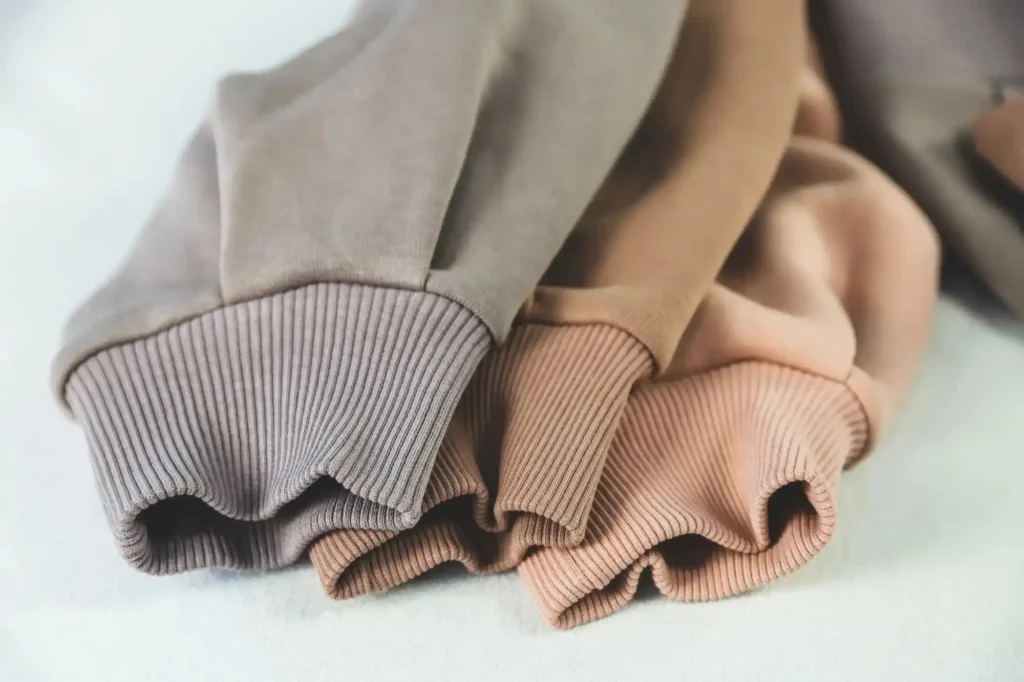
Garment dyeing can produce visual characteristics associated with the finished garment rather than just a dyed fabric roll.
The dye interacts with the completed garment construction.
Depending on the fabric, construction, and dyeing process, this can create variations in:
- Seams
- Folds
- Surface appearance
- Color depth
- Garment character
This is one reason garment dyeing is sometimes selected when a specific aesthetic is desired.
6. Not Every Trim Automatically Works With Garment Dyeing
This is a critical issue for custom apparel.
If the entire garment enters the dyeing process, buyers need to consider what happens to components such as:
- Zippers
- Buttons
- Labels
- Sewing thread
- Elastic
- Drawcords
- Decorative elements
Different materials may respond differently to the dyeing process.
Therefore, compatibility needs to be checked before production.
7. Sampling Becomes Especially Important
When garment dyeing is involved, the physical sample can provide information that a simple fabric swatch cannot fully show.
Buyers should evaluate:
- Overall color
- Seam appearance
- Surface character
- Shrinkage
- Garment dimensions
- Trim appearance
- Color variation
The final garment should be treated as the reference rather than assuming that a pre-dyed fabric sample will perfectly predict the finished product.
8. Which Method Should Buyers Choose?
There is no universal answer.
Piece dyeing may be appropriate when:
- Fabric color consistency is a major priority
- Large quantities are required
- The garment uses conventional construction
- Fabric needs to be approved before cutting
Garment dyeing may be appropriate when:
- A specific garment-dyed appearance is desired
- The product is designed around post-construction dyeing
- Color character is part of the product identity
- The trims and construction are compatible with the process
The decision should be based on the product rather than simply choosing the method that is most familiar to the factory.
Questions to Ask the Manufacturer
Before production, buyers can ask:
- At what stage will the garment be dyed?
- What fabric is being used?
- Have the trims been tested with the dyeing process?
- How will color approval be handled?
- How will garment dimensions be controlled?
- Is the approved sample dyed using the same process as bulk production?
- How will production lots be identified?
These questions help avoid surprises later.
Our Approach to Custom Apparel
For custom apparel requiring dyed fabrics or garments, our approach is to establish the dyeing method during product development.
The dyeing process, fabric, trims, garment construction, and approval sample should be considered together.
When garment dyeing is selected, the physical sample should represent the actual production route as closely as practical so that buyers can evaluate the finished appearance before bulk manufacturing.

Conclusion
Piece dyeing and garment dyeing are not simply two different ways of producing the same color.
They represent different production routes and can create different requirements for sampling, trims, construction, and quality control.
For B2B buyers, the most important question is not which method is universally better.
It is:
Which dyeing method is appropriate for the specific garment you are developing?